

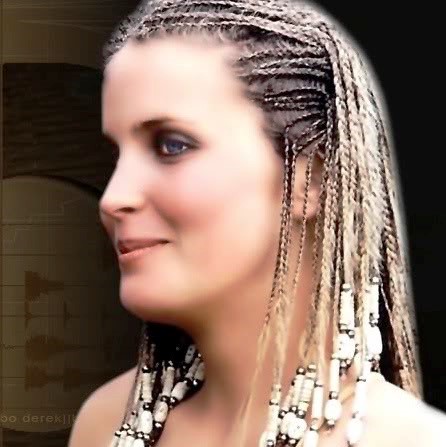
 I’m sure you saw the headline: “‘Hunger Games’ Actress Amandla Stenberg Calls Kylie Jenner’s Cornrows Cultural Appropriation.” I had never heard that term before so I looked it up:
“Cultural appropriation is the adoption of elements of one culture by members of a different cultural group, especially if the adoption is of elements of a non-dominant culture by members of the dominant culture. Cultural appropriation may eventually lead to the imitating group being seen as the new face of said cultural practices. As minority cultures are imitated by the dominant culture, observers may begin to falsely associate certain cultural practices with the imitating culture, and not with the people who originated them. This is often seen in cultural outsiders’ use of an oppressed culture’s symbols or other cultural elements, such as music, dance, spiritual ceremonies, modes of dress, speech and social behavior, among other cultural expressions.” Wikipedia.
Obviously, this is the latest in the assault against decent people who, in a multi-cultural society such as the ONE WE LIVE IN (I call it America), wish to adopt certain styles, foods, music, dance, etc. because they enjoy, admire, aspire, etc to be like those groups with whom it originates.
“Rejection of the idea that cultural appropriation is harmful is often based on a choice to see “appropriation” as “cultural cross-fertilization” and as something done out of admiration with no intent to harm the cultures being imitated. It is also argued that the specific term “appropriation,” which can mean theft, is misleading when applied to something like culture that is not a limited resource: unlike appropriating a physical object, others imitating a cultural concept doesn’t inherently deprive its original users of the use of it. For instance, John McWhorter, a professor at Columbia University and contributing editor at The New Republic, has written that, “With gay white men and black women, for example, it’s not as if the black women are being left without their culture after the “theft,” … The idea that when we imitate something we are seeking to replace it rather than join it is weak. … Every language in the world is shot through with words and grammatical patterns from other languages—that is, signs of people in the past doing what we would call ‘appropriating.'” Critics argue this analysis omits the issue of colonialism, context, and the difference between appropriation and mutual exchange. They argue that mutual exchange happens on an “even playing field,” whereas appropriation involves pieces of an oppressed culture being taken out of context by a people who have historically oppressed those they are taking from.” (McWhorter, John. “You Can’t ‘Steal’ A Culture: In Defense of Cultural Appropriation”. The Daily Beast.)
Given this new politically correct phenomena, I would propose a list of things that are now off-limits due to overt cultural appropriation. These are but a small sample:
Food
- Bagels – Bagels are a Jewish food, everyone knows it. So unless you have a Jewish last name, or a Jewish mother, you are no longer able to buy or consume a bagel. Men, you may drop your drawers to prove your Jewishness…. Only your Mohel knows for sure. This ban extends to lox (smoked salmon), Hebrew-National hot dogs and Kosher dill pickles.
- Chinese food – I don’t really have to explain this. Chop Suey is OK.
- French Fries – Frites are from France and most people hate the French anyway. BTW, this eliminates most good food as well. Fish and Chips are also banned because they are British.
- Tacos – Mexican, sorry, no. Burritos are OK as they were invented here. Tex Mex, while borderline, is acceptable in Texas only, lest anyone accuse you of being one of them…
- Southern Food – No one except those from the south really wants to be associated with the confederacy for obvious reasons. No BBQ, fried foods, collard greens, etc,
- Sushi – Not a soul in the US ever ate raw fish before sushi came to Japantown. Stay away from it.
Dress
- Jeans are out. Only real cowboys wore jeans, anyone else is a phony.
- Bikini bathing suits – French
- Italian designer suits – gone.
- Hawaiian Shirts – thankfully no longer permissible.
Hair
- Afros – Any attempt to apply a permanent wave in order to make straight hair curly might be construed as attempting an Afro or Afro-like hairstyle. Not allowed.
- Straight hair– those with naturally curly hair are not able to apply a straightener or use extraordinary means to straighten curly hair in order to resemble Asian or Native American straight locks.
- Cornrows or braids of any kind are off-limits.
Language
The following words or phrase are example no longer permitted in most vocabularies
Yo
Y’all
Mama (except by a child under the age of 10)
Brother (except for legal siblings and in certain church settings)
Schmuck (most don’t even know what it means anyway, it just sounds bad)
Schlep
Mensch
Ciao
Danke
N-word (except where authorized)
Cheers
Bloody (not specifically referencing the bodily fluid)
The entire English language and any other language, for that matter
Music
- Rap and Hip-hop ( African-American)
- Country ( Again for obvious reasons)
- Jazz (African-American)
- Most classical music (of European origins)
- Rock and Roll, which has its origins in Black, gospel and blues music, all belonging to the African-American community.
- Motown – ’nuff said.
Mormon
- Oh My Heck – No longer allowed if you are not a native born Utahn. Be prepared to show proof, if you dare.
- Stakehouse – please convert to Stake Center. You’re making me hungry
- Funeral Potatoes – Now only served at funerals. Not appropriate at non-funeral occasions unless you are attempting to scare away a potential suitor for one of your children as in “It’s your funeral”
- Frog-eyed Salad, which is neither frog-eyed nor salad. Please refer to as “Tapioca-infused Jello™.” Frogs are quite unhappy with the insinuation.
- Only True Church – Yes, I know that the Lord stated it in D&C Section 1:30, but if it offends one person, you cannot say it any longer.
As one can see, following the strict guidelines of no cultural appropriation does not leave us much room in this melting pot society we live in today.
 Wheat & Tares
‘Frog eyed salad’???
Never have I been so grateful to have been born in the mission field. I solemnly promise never to appropriate this cultural artifact.
It seems like with cultural appropriation, there is less danger of harm than with cultural imperialism.
CA is something you do of your own will, and you don’t remove it from the other or impose it on anyone else.
With cultural imperialism one culture is imposed on another. We for example get a lot of British, and American TV shows. Culture that is not ours but that is mostly what we see on TV. How much Australian TV do you see in US?
Much of the church culture is also of this type, white shirts, conservative politics, basketball, etc.
I don’t think I am as concerned with cultural appropriation as I am with cultural imperialism.
As long as I get my candy, pop, potato chips and ice cream.
Is it cultural appropriation for Pacific Islanders to dress up in ancient Mayan costumes to play darkened-skin Middle Easterners in a church movie?
A few years ago, one of my dear partners learned of my fondness for Mormon funeral potatoes. After obtaining a recipe from a genuine LDS member, he attempted to prepare this fine delicacy. He’s ordinarily an amazing cook, but alas, something went wrong, and the result was disastrous.
So rest easy, LDS friends—not only are the homosexuals NOT coming after your temple weddings, we’re also NOT claiming your funeral potatoes as our own. It seems we’re just not culturally equipped to handle them properly!
I think, in order for there to be an appropriate appropriation, “ya’ll” is supposed to be spelled “y’all” as it is a contraction of “you all.”
I tend to agree with Geoff here.
I like the melting pot. It’s led to far more choice in supermarkets compared to when I was a child. Lots of varieties of rice and pasta, canned beans, chick peas etc. I don’t think cultural appropriation is as a much a complaint in Britain.
We do get Australian TV in Britain – or did. I seem to recall that Neighbours and Home & Away were very popular when I was younger. I’ve no idea what’s on TV now.
Nick,
Funeral potatoes, like the Word of Wisdom, were “adapted to the capacity of the weak and the weakest of all saints.
This includes Mormon cooks.
IDIAT,
I changed it. Thanks,
Many people benefit and profit from “acting black” without ever respecting or supporting the culture they are appropriating.
I was disgusted by a guy in an upper division history class I was auditing at BYUI – we were talking about dressing up for halloween and how to do it respectfully. He decided to share the “hilarious” story of when his sister dressed up like a black woman w dreads, big chest, big booty, etc. and she got pulled over for speeding or something and the policeman thought her outfit was so hilarious he didn’t give her a ticket. Black women are regularly discriminated against because of their color and body type (see Serena Williams being called a “man” by tennis officials) and they just can’t take it off like a costume at the end of the night.
Another example: BYUI had a “extravadance” night where the dance department put on a dance about families from around the world or something like that. One of the dances they did was the haka, from the maori (?) culture? I didn’t like that they provided no context or information on different cultures’ practices so there was little way to show respect for them: ie the crowd was laughing throughout the whole thing during a cultural practice that used to be considered so sacred it wasn’t done for outsiders. they thought something sacred to the country they were imitating was hilarious — which when I think of it, causes mormons to lose their crap and try boycotts up the ying yang (garments on tv, etc). Also there were many dances that just played into stereotypes instead of accurately representing a culture. To me the whole presentation was a mess because they tried to say it was a cultural experience without (1) avoiding using stereotypes (2) providing context that fosters mutual respect
What are you? Meshuga? You’ll take away my tchotchkes over my dead body.
I don’t think cultural appropriation means you can’t have a melting pot – it means you show respect and seek to understand the culture of what you are using and not just doing it because it’s hilarious or looks cool.
Yeah, mormons would be pissed if people dressed up as joseph and the 34? wives and they all showed up in temple robes for halloween. Or if they thought dressing up as a “mormon exterminator” was funny. Lack of respect and building jokes on the suffering of others are real concerns.
Kristine,
“Yeah, mormons would be pissed if people dressed up as joseph and the 34? wives and they all showed up in temple robes for halloween.”
The way cultural appropriation has been cast is not stereotype portrayal and ridicule of other cultures and people as you are describing.
It is adoption of other cultural elements like the story I posted on Kylie Jenner.
There is a huge difference between wearing cornrows and performing in blackface.
“French” fries are Belgian.
The problem with cultural appropriation is not that people “enjoy, admire, aspire, etc to be like those groups to whom [a cultural element] originates”. It’s that an uninformed observer often has no idea which culture is deserving of their admiration. Cultures whose elements are appropriated are not losing the practice; they are , as you identified, a non-rivalrous good. What they are losing is the opportunity to challenge stereotypes. When white models wear typically black hair styles, black models lose an opportunity for black women to be seen as beautiful by a wider audience.
the Joseph Smith and polygamists example was a poor example for this thread – it’s an example I used in another thread somewhere of avoiding cultural appropriation while dressing up for halloween. There people thought there should be no limit on what you should wear if you meant it to be funny and not cause offense so I used that example. We can strike it from this discussion.
Wearing corn rows for fun or to be cool could be fine if you seek to understand and respect the culture it comes from and not use it for your own gain. The OP about Kylie Jenner and Amanda Stenberg was about a celebrity using it for her gain (everything a kardashian does is for gain) without showing respect. There are obviously more egregious examples and more lighthearted ones. People can be ignorant and “just like something” but it would be decent to learn about the thing they like: to understand how and why it is important to that culture, many times minority cultures are discriminated against because of the thing you appropriate – but when you do it you get a pass.
People could have been harassed, beaten, killed, excluded, lose jobs over, etc. because of exhibiting the part of their culture that you are dressing up like just for fun – I can see why they might be upset people think it’s no big deal to costumize it like an accessory and not care about the real challenges the people face when it is actually exhibited in the right way from a person of that culture.
#14 That’s what I was going to say!
Glad you left me the opportunity to show my appreciation that someone came to the defense of one of the beleauguered Kardashian/Jenner clan with this stirring entry. (/ sarcasm)
““French” fries are Belgian.”
It’s disputed. And half of Belgium is French anyway.
Daniel,
“It’s that an uninformed observer often has no idea which culture is deserving of their admiration.”
Firstly, how would you know this? and why does it matter? I don’t eat French Fires because they came from France or Belgium, it is because I like them. And I don’t think it is required to pay some sort of homage to them each time I decide to eat them.
“It’s that an uninformed observer often has no idea which culture is deserving of their admiration. ”
Again, what proof would you have of this? White girl wears cornrows so that black girl who doesn’t doesn’t get a modeling jobs?
Now, if you said that white people wear dark makeup and play Native Americans in movies so that roles do not go to real Native Americans, I can see that happening because it used to happen all the time. But, again that is a totally different topic than the one we are discussing.
Alice,
“Glad you left me the opportunity to show my appreciation that someone came to the defense of one of the beleauguered Kardashian/Jenner clan with this stirring entry.”
Didn’t
Kristine,
“People could have been harassed, beaten, killed, excluded, lose jobs over, etc. because of exhibiting the part of their culture that you are dressing up like just for fun”
You are still missing the point.
We live in such a hyper-sensitive world where just about everything is an affront to someone for some reason. And these reasons have to be invented, like this one.
There are very offensive things that still go one. Let’s work on that. Not worry about a haristyle.
“There are very offensive things that still go one. Let’s work on that. Not worry about a haristyle.”
That’s my favorite fallacy, the fallacy of relative privation, and you just butchered it. You just wrote a post about your discomfort having read a headline, and then discounted the loss of life, liberty, and property as beside the point. You can’t really deploy this fallacy after that line of reasoning. It’s patently obvious discomfort from changing social expectations are less important than loss of life.
Let’s give it another go, and see if we can do this fallacy justice.
I’m sorry (not sorry) that cultural mores governing politeness have changed. You should still get along just fine if you just focus on working on the really offensive things first. For example, dying is worse than seeing an arrangement of words you don’t like. There are very offensive things that still go on. Let’s work on them, and not worry about a headline.
Now that is a nice fallacy.
But for black women their hair is an integral part of what they are often harassed for. Didn’t a few years ago a white radio announcer get fired for calling a girls basketball team with dreadlocks a bunch on nappy headed hoes? Their hairstyle represents their identity, proud cultural roots, at times some hate it be it will never match any idealized beauty standard, and they’ve been racially and sexually harassed because of it. To many black women it is a big deal that the girls who kick them in the teeth while they’re down dress up like them for fun. Federal offense? No. But I’m not going to discount how they feel about it.
My husband’s Latin American family regularly gifts us touristy products — straw hats, guayabera shirts, bags, hair combs, etc. I thought it would be snobbish of me to not use them, but now I realize I’m guilty of cultural appropriation. Shame on me for enjoying someone else’s culture!
I am a very, very white girl with very, very frizzy hair. Allover braids seemed like a good solution in my early 20s. Now I understand I was not supposed to like them. It is more respectful to “other” other cultures. No more French braids for me, either.
This isn’t an issue I feel particularly strongly about. That said, I think your post misses the point a bit, Jeff, particularly with respect to the current dust up. My understanding of this issue is that people aren’t upset simply because whites are appropriating black hairstyles. They’re upset because when blacks wear cornrows, they are often seen as dirty, ghetto, gangsta, etc., yet when whites appropriate that style, it’s seen as clever, glamorous, beautiful, elegant, exotic, etc. whether you agree with that assertion is a separate issue, but the issue is not simply one of being pissed that a different culture is stealing your stuff. It’s the double standards that are applied to those cultures when they use or wear or implement that stuff. To the extent those claims have merit, this becomes far more an issue about society’s views and opinions of different cultures and races, which is, in my opinion, an issue worth discussing.
brjones, and Kristine to an extent
“It’s the double standards that are applied to those cultures when they use or wear or implement that stuff.”
I don’t dispute what you are saying at all, but it is not the point. The point is we have yet another “syndrome” that has been created which not only masks any real issues, but makes a mockery of them by bringing up stupid stuff like the example I gave.
So, if we are going to buy into that cultural appropriation is a clear and present danger to society in general and group in specific, then we are going to have to give up many things as I mentioned and more.
It would be ridiculous.
Daniel,
“You just wrote a post about your discomfort having read a headline…”
Uh? I wrote a tongue-in-cheek post about all the things we’d have to give up if cultural appropriation is a real thing and not some new made-up thing to make decent people feel bad about yet something else.
Jeff, I don’t disagree that anyone who would make the argument you’re elucidating would be being somewhat ridiculous. But I strongly disagree that that is the point of this issue. I just re-read the article that you linked to in the OP, and the entire point of Amandla Stenberg’s complaint about this issue is what I mentioned above. For example, from that article:
“Appropriation occurs when a style leads to racist generalizations or stereotypes where it originated, but is deemed as high-fashion, cool, or funny when the privileged take it for themselves. Appropriation occurs when the appropriator is not aware of the deep significance of the culture that they are partaking in.”
She went on to further discuss white women making their lips and rear ends bigger, while black women are criticized or mocked for having similarly big lips and rear ends. This is exactly the point she and others are making with respect to cultural appropriation. In fact, I have yet to see a single person level the simple complaint that white people shouldn’t be taking black people’s cultural markers because they belong to black people. If you have examples of such shallow complaints about appropriation, I’d be interested in seeing them. I think the issue is considerably more complex than the way you’re presenting it.
I also have a question, Jeff, which will seem combative, but I promise I don’t mean it in a caustic tone. Do you see the embrace by many southerners of the Confederate Flag as “decent people being made to feel bad about yet something else?” I think just because decent people may embrace something in a way that is not intended to be harmful, doesn’t mean it isn’t actually causing harm. Isn’t it possible this is an example of that same principle at work?
So is The Book of Mormon play cultural appropriation?
brjones,
“She went on to further discuss white women making their lips and rear ends bigger, while black women are criticized or mocked for having similarly big lips and rear ends. This is exactly the point she and others are making with respect to cultural appropriation.”
The problem here, I think, is you are making the big leap that this young girl’s opinion is fact. Big lips and large rear ends are not exclusive to any one group. And you cannot make the additional leap that a white women goes into the doctor and says, I want a rear end like so and so or big lips like so and so.
BTW, plenty of the women who have those items enhanced get made fun of because they generally do not look natural. Another topic, I guess.
I suppose people who tan are appropriating as well?
brjones,
“Do you see the embrace by many southerners of the Confederate Flag as “decent people being made to feel bad about yet something else?” I think just because decent people may embrace something in a way that is not intended to be harmful, doesn’t mean it isn’t actually causing harm. Isn’t it possible this is an example of that same principle at work?’
No, there is no comparison. In fact, I addressed it in my last post in this manner:
“In any discussion by opposing sides, statements often get thrown around as fact and indisputable, whether they, in reality, are or not. We see it all the time. Such as during the debate over the Battle Flag of the Army of Northern Virginia, commonly known as the Confederate flag or the Stars and Bars. One side argued that it is a racist symbol of slavery and the other that it is merely a symbol of Southern pride. Those that often chose the latter position fail to recognize the actual history of the flag, the real reason the Civil War was fought and how the flag has been used in the past 60+ years to promote segregation and racist ideology. The former argument made mostly by folks who have not been subject to slavery or segregation, so for them it is a historic symbol, more than an actual one.”
In my mind, it is no different than the Nazi flag. You don’t see the average German wishing to display the Nazi flag because many understand its historical and present-day connotation.
I certainly don’t think cultural appropriation is akin to stealing a novel written by someone else and publishing it under your own name but it also shouldn’t be dismissed as nothing.
An example of cultural appropriation:
A white man in the 1950s fails to launch a successful musical career. He then embeds himself in black culture, copies the style of music and dance he encounters there, and gives it another try. The record companies now love him and his new music, while refusing to work with any blacks, and he becomes a huge star. This is cultural appropriation. The people who made the music get nothing, while the white man who copied it reaps riches. Further, many may think this music was created by whites, when in fact it was created by blacks.
One could argue that the problem here resulted from the blatant racism of the time, and that was the cause of the cultural appropriation. Fair point. One could also argue that thanks to improvements in race relations, this kind of super unfair cultural appropriation no longer occurs (in the US at least). Fair point. But I wouldn’t say that means cultural appropriation is “the latest in the assault against decent people” and I wouldn’t say that cultural appropriation is people who “wish to adopt certain styles . . . because they enjoy, admire, aspire, etc to be like those groups with whom it originates.” The example I provided above shows a man who made TONS of money by copying the culture of a minority group. Modern examples also exist where artists copy the stylings of other groups in order to ream large financial rewards while at times deeply offending members of other cultures. The Wall Street Journal ran a piece criticizing Katy Perry for her depiction of a geisha at the American Music Awards. She borrowed this act from another culture and twisted it around in a way that many found very offensive, some calling it “yellowface”. And I think brjones’ quote, from the article Jeff cited, got it right: cultural appropriation can lead to the privileged group being painted in a positive light while the appropriated group suffers from reinforced negative stereotypes.
But, comparing my example from the 1950s with modern examples shows that cultural appropriation used to be much worse than it is today, and that’s certainly a good thing. And I certainly agree that many claims of cultural appropriation are frivolous nonsense.
Some people believe Madonna culturally appropriated voguing by copying it from some members of the gay community. One could argue she encountered something she thought was cool, and she ran with it. No harm done. But I can also see the other position on this. There are two sides to this issue. To dismiss it as just whining and an assault against decent people is unfair, in my opinion.
are more modern examples:
(1) I’d totally be OK with Tex-Mex only being allowed in Texas, because the rest of y’all mess it up. (I do, however, offer “y’all” as a cultural gift to all speakers of English, since it is clearly the best and most logical 2nd-person plural that we have in this language [“yinz?” “you guys?” Are y’all even trying?])
(2) I think several of the other comments have mentioned this in some way, but I think a problem with cultural appropriation is that it usually ends up disrespecting the culture that originally created it, because, as with my playful example in (1), the culture that appropriates it usually “messes it up.” Tex-Mex is a silly example, but another example is the treatment of AAVE (see longer blog post here).
The treatment of AAVE usually invokes a couple of things. Firstly, native AAVE speakers (typically black people) who speak in AAVE are usually criticized for “not speaking proper English,” disregarded or marginalized for speaking AAVE, etc., So, that’s the first thing.
…but then, when non-native AAVE speakers (typically not black people) people culturally appropriate AAVE, one thing that happens is that they often are not socially penalized in the same way (because the understanding is that they may only be using it ironically or facetiously.) But then the second thing that happens is that, because non-native AAVE speakers people typically do not recognize (or care) that AAVE is an actual system with its own grammar, definitions, etc., the appropriations often misuse terms in ways that perpetuate or read back into the stereotypes discussed in the previous paragraph.
Dexter:
“A white man in the 1950s fails to launch a successful musical career. He then embeds himself in black culture, copies the style of music and dance he encounters there, and gives it another try. The record companies now love him and his new music, ….”
This is not specifically cultural appropriation. This was business and yes, they clearly ripped off the black artists of the day, and continued to do so for many years.
Looking back on it now, a one level, it was wrong, not to pay appropriately those folks for using their music. But, Little Richard’s version of “Tutti Fruiti” will always be better than Pat Boone’s.
But, it also led to exposure that Black Artists would never probably achieved on their own.
There may have never been a Motown if it weren’t for Elvis, Jerry Lee Lewis, and those other artists who used black music to advance their own careers. Most of them, like the Beatles and other British invasion groups did it out their love for the music, not some sort of sinister plot. It was the monetary rip-off that is the issue there.
Holland-Dozier-Holland made tons of their money on other artists recording and performing their music. Under your model of Cultural Appropriation, they would not have been able to do that.
“She borrowed this act from another culture and twisted it around in a way that many found very offensive, some calling it “yellowface”. And I think brjones’ quote, from the article Jeff cited, got it right: cultural appropriation can lead to the privileged group being painted in a positive light while the appropriated group suffers from reinforced negative stereotypes.”
Bad example, because this is the political correctness of the new “cultural appropriation” syndrome. I doubt you can find a Japanese group who protested loudly about it. It was an artistic expression, rightly or wrongly. People are free to vote with their pocketbooks, if they don’t like it or think it inappropriate.
By the standards you are trying to impose, there should have been no Eminem, Bestie Boys or any other white rappers/hip hop artists.
Can’t agree with that.
Andrew.
“Firstly, native AAVE speakers (typically black people) who speak in AAVE are usually criticized for “not speaking proper English,” disregarded or marginalized for speaking AAVE, etc., So, that’s the first thing.”
As do Spanglish speakers by many native Spanish speakers. As do some southerners by northerners. As do many folks who say “ain’t,” As do Native French people of French-Canadians. A lot of times because they cannot properly communicate with them. Just like what happens in foreign countries when you can’t speak the language.
“…but then, when non-native AAVE speakers (typically not black people) people culturally appropriate AAVE, one thing that happens is that they often are not socially penalized in the same way ”
That’s because they ain’t be having rhythm, my brotha….” And yes, many times, they are penalized with the “why are you talkin’ black…? You’re not black..”
Jeff,
i think that one question that I would ask for many of your examples are, “Does this criticism essentially happen because the person criticizing views the object of criticism as basically being a poor form of an idealized/standardized language?” In other words, is Spanglish criticized because it is seen as a poor form of standardized Spanish? etc.,
I think that happens with AAVE and also to many of the examples you mention.
But the main point is that AAVE (as with many of the examples you mention) is its own system. It is not simply “English spoken poorly.”
I’m not sure whether you meant this as an ironic example of butchering AAVE or if that was totally unironic, but I guess the point would be that whether it is the former or the latter is basically irrelevant.
I think you misinterpret what I mean by “penalization” and also highlight that your context of penalization is very different than what my intention was.
If a native AAVE speaker (esp. if black) speaks AAVE, then they are seen as less educated, unprofessional, etc., This has implications in seeking jobs, etc.,
If a non-native AAVE speaker (esp. if not black) speaks [however butchered a form of] AAVE, this is not imputed to his or her intelligence, professionalalism, etc., It’s just ironic, funny, cool, making a point, being edgy, etc.,
But to compare my sense of penalization vs your sense of penalization: your sense of penalization is a non-black person being told, “Why are you talkin’ black…? You’re not black” [disregarding any criticisms that may actually be getting at: “Why are you attempting to use AAVE when you aren’t even close to getting the grammar, terminology, etc., correct?”], which will nevertheless not substantially hinder that person in endeavors that they attempt to do with their use (or misuse) of AAVE — hence, non-black hip hop/rap artists do not face financial losses, even if they get called out by black hip hop/rap artists or fans for a variety of racial or cultural faux pas (because they can count on the support of a larger mostly white financial structure and a consumer base that basically never cared about any “authentic” racial or cultural sense.) I mean, the stakes just are so different.
“… (cultural appropriation) is the latest in the assault against decent people …”
Are you not one of those decent people adding cultural appropriation to the long list of assaults they have experienced because of political correctness?
Andrew, is the problem the cultural appropriation, or that the appropriation brings to the forefront the disparity in treatment between the appropriated and the the appropriators?
In your example with AAVE, I see the problem with looking down on people who speak it. Only really particular English professors consistently use “proper” grammar; for the rest of us whiteys, there are numerous acceptable ways to make grammar mistakes. Perfect example: Answering “good” instead of “well.” There are even many situations where correct grammar appears inappropriately stuffy. Perfect example: Answering “well” instead of “good.” Whites are generally not penalized for these acceptable mistakes, so it makes no sense that blacks are penalized for a different set of supposed mistakes. If an entire group of people speaks that way, it is no longer a mistake but a language or dialect, right?
But back to my original question. Is it the appropriation itself that’s offensive? Is appropriation sometimes offensive and sometimes not, and if so, when? When we travel, inevitably my husband quotes Chris Tucker: “I’m on vacation and I want some mu shu.” Similarly, when my husband is being obnoxious (e.g., repeatedly quoting Chris Tucker), I quote the King of Spain to Hugo Chavez, “¿Porque no te callas?” (Why don’t you shut up?) My husband, a native Spanish speaker, finds it hilarious. In both cases, the joke (to me) is the discrepancy between the identity of the speaker and voice, not the original speaker imitated.
Bagels – don’t eat ’em due to having a GI tract that isn’t ‘factory original’, not out of anti-Semitic feelings. As for ‘lox’, aka smoked salmon, why should the Jews have all the good stuff? Have a good friend that catches salmon with a commercial license in the Delta (they should be running about now) or on the American or Sacramento rivers…looking forward to several 5+ lb salmon fillets.
I also like chicken and waffles, got hooked when I lived in Georgia…it’s more ‘Southern’ than ‘black’, but it seems that no one outside the Deep South except for African Americans enjoys it. More for me.
It reminds me of the ‘Family Guy’ episode…”Peter Griffin..Husband, Father,…Brother?” where son Chris, being on the Buddy Cianci JHS basketball team (but relegated to towel boy status due to his obvious lack of athletic prowess) takes on ‘ghetto’ slang and mannerisms in imitation of his teammates (go Dust Mites!). Peter, in response and per Cleveland Brown’s suggestion, takes Chris to soak in ‘Irish’ culture about Quahog, and they look up the family history at the library…where Peter finds a daguerreotype of one Nate Griffin, who, save for being a few shades darker in tone, looks just like Peter. So, Peter, now believing himself to be ‘black’, tries to fit in to his newly discovered heritage, with predictably oafish results, including wearing a dashiki and calling himself ‘Tichwa Tembo’. The episode ends up with Peter, in vision, having a conversation in the mirror with ‘Nate’, wherein the apparition advises Peter to not get so hung up on race…as well as reminisce over sexual encounters with two of Peter’s female ancestors.
Clint Eastwood spoke his own opinion of cultural appropriation and how it can be done in a most inappropriate manner. Like his style, but I prefer how “Mr. Wizard” would always admonish Tooter Turle (Help, Mr. Wizard!) to ‘be vot you is, not vot you ist not. Folks dat are demselves are de happiest lot!”. Without further ado, Clint…
This is satire, right? Or is this white man actually trying to justify white supremacy?
Jeff,
My 1950s example IS specifically cultural appropriation. It is a textbook example of cultural appropriation. If you don’t think cultural appropriation is a serious issue, fine. If you don’t think people who culturally appropriate are doing anything wrong, fine, you are entitled to that opinion. If you think people should stop whining about cultural appropriation, that is fine too. That seems to be your position. So why don’t you just stick to that? Instead of saying you don’t think cultural appropriation is a serious issue, you claim it doesn’t exist or shouldn’t exist. You act like the expert of what is and what is not cultural appropriation, when you don’t fully understand it. You admitted that you didn’t even know what it was a few days ago, and now you are the expert on it? I mean no offense by this. I appreciated the post because it led me to learning more about this subject. But brjones, Daniel Smith, and Andrew S. have made some great points, and some articles I have read have helped me learn more about it. brjones is right, you are missing the point. There’s no shame in admitting your first knee-jerk reaction to cultural appropriation could be off. I think brjones showed this in post 24. You are allowed to adjust your view, you don’t have to double down on your initial position and hammer away at everyone who disagrees with you.
Regarding Katy Perry’s “yellowface” performance, plenty were offended. I don’t understand how you can say that you doubt any Japanese group protested loudly. TONS DID. And being able to vote with their pocketbooks doesn’t solve it. You said, “it was an artistic expression, rightly or wrongly.” Huh? Of course it was an artistic expression. That is completely obvious and besides the point. The issue here IS whether that is right or whether it is wrong. Being an artistic expression does not absolve guilt, it is the medium by which cultural appropriation occurs. Sure, Katy Perry can’t be physically stopped or sued for it, but there is plenty of room for critics to say it was done in poor taste, that it was offensive, that it was wrong. That’s the issue. Is it wrong? You said it was a bad example? HOW? It is a perfect example of cultural appropriation, but you just don’t think it’s harmful. That’s what you are saying. That’s all you’ve said this whole time, cultural appropriation is just whining from a bunch of whiners. If that’s your opinion, fine, but instead of simply stating that, you want to change the definition of what cultural appropriation is and what it is not, which is ridiculous. You think it’s a bad example of cultural appropriation while the Wall Street Journal (and a hundred other reputable sources) deem it to be cultural appropriation. And the imitated culture’s opinion also means more than the opinion of a member of the imitating culture.
The quote brjones sent from the article you posted was spot on, and you criticized it by saying that it was a “young girl’s opinion.” Why did you feel the need to mention it was a young girl? Would it have more merit if it were someone who was older? Or a man? And she was dead right. Whenever someone disagrees with you, you ask for proof. You wrote a long opinion as a post, and when Daniel Smith disagreed with you, you demanded proof. Come on. Your other patented move, when someone disagrees with you, is to label it as merely an opinion. This is a place where people state their opinions. Your whole OP was a huge opinion with no proof. Practice what you preach, or, preferably, stop preaching. Instead of arguing with everyone who has tried to enlighten you on what cultural appropriation is, perhaps you should realize you don’t fully understand it and learn something. Just because you wrote the OP on cultural appropriation doesn’t mean you know more than the commenters about it. You clearly don’t. No one is suggesting we have to stop eating bagels. No one is suggesting no songwriter should ever borrow from another culture. No one is suggesting there should be a new tortious claim for cultural appropriation whereby victims of cultural appropriation can sue those who appropriated their culture. This is about whether it is harmful or not, and should anything be done about it? Thankfully, the racism in this country is not as blatant as it used to be, but it’s still there, cultural appropriation shines a light on some of the more subtle forms of racism, and understanding it and what harm it can cause is worthwhile to combat racism. Some people will think it’s nonsense and just whiners whining. Fine. You can feel that way. But that doesn’t change what cultural appropriation is, and that doesn’t change that some people think it is very harmful and something should be done about it, even if that something is simply acknowledging it and trying to understand the context of the culture that is being appropriated. I’m on that side of the debate.
But, as I pointed out earlier, I agree with you that there will be tons of frivolous examples of people claiming cultural appropriation when there is no harm done. That may even be the majority. But we shouldn’t let some frivolous claims dilute all the claims. Some are legitimate. And some are very tough to figure out. My 1950 example was clear as day. But Madonna seeing some dance moves at a gay club, and using them in her music, I don’t see anything wrong there. What was she supposed to do? Only derive dance moves from her home when she is all alone? Give out cash to people she saw doing those dance moves? I get that it’s tricky, but I think they should be evaluated in a case by case basis. We shouldn’t paint all claims of cultural appropriation with one brush.
Laurel,
These two things cannot be separated in the analysis — a (non-strawman, at least) accounting for cultural appropriation has the disparity of treatment as part of its definition. (This is also, for example, how we can distinguish cultural appropriation from cultural exchange or cultural assimiliation…these are variations on either the level of disparity or which party is adopting which culture.) I also think that cultural appropriation has to account for the disrespect or lack of care that is involved (usually as a implied result of the disparity).
(I mean, I think you’re on to something with the good vs well thing, but it’s a different thing…but I think it’s also worth pointing out that, as you’ve also noted, there is a different system of “acceptable mistakes”. I think this is fairly complex…it would get into regionalism, socio-economic discrimination, etc., Like, there are acceptable mistakes, but there is also penalization for sounding too Southern, for example, or for presenting outside of particular socioeconomic classes. These may be different than the racial/cultural things.)
But yes, back to your original question…given my first paragraph here, I think that appropriation includes the context of the disparity and the lack of care, so that yes, the appropriation itself is offensive. OTOH, I would say that if you don’t have disparity, you don’t have lack of care, then you probably don’t have appropriation.
I don’t see how quoting very specific quotes is cultural appropriation.
Dexter #41,
“My 1950s example IS specifically cultural appropriation.”
Disclaimer to W&T readers: Comment #41 is opinion, not fact.
Note to Dexter: Blog posts are opinion pieces just like newspaper editorials. They may contain facts to support one’s opinion, but are not, in the end anything but the author’s viewpoint.
BTW, so is your comment above, which contains no facts.
Finally, I wrote about it because I’d never heard the term before. And the examples I have seen, including the one I cited are ridiculous and just another attempt at making people feel bad and trying guilt-tripping them.
#5 – Nick, nothing wrong with another attempt at the FUNeral potatoes, and as if often done with CA situations, rename it and make it something of ‘your’ own. BTW, there’s nothing ‘French’ about “Les Pommes Frites”, they didn’t invent frying potatoes in vegetable oils (but have certainly taken to it, and in la Belle France, if speaking in English, they’d likely call them ‘chips’ as well as the Brits just across the ‘Chunnel’ – had enough of my mixing metaophors yet?). The term comes from how the spuds were CUT, as in ‘frenched’. But please do with potatoes what you will and enjoy…certain the folks at JR Simplot won’t mind.
And I never used the term “Freedom Fries” either when we despised the “Cheese-Eating Surrender Monkeys” for not going along with our adventures in Iraq and Afghanistan. The French likewise didn’t cooperate with regard to Operation El Dorado Canyon back in ’86 (they wouldn’t allow F-111s to fly from their UK bases directly to Libya, though we wouldn’t disclose their targets, the French weren’t fooled, so they had to go all the way across the bay of Biscay, over Spain and the Med, getting several ‘gas stops’ by Kc-135s on the way, the loss of one of the ‘111s’ was blamed not due to any particular skill of the Libyan AAA but crew fatigue). With the French, turning up their noses at ‘les Americans’ goes all the way back to DeGaulle, and I doubt it’ll ever change, but renaming a popular AMERICAN recipe to ‘snub’ them is the height of silliness.
#42 – I doubt it. In the cases I’ve pointed out, appropriating the ‘culture’ of a minority is at best bemusing. In other cases, as from “Gran Torino”, it’s seen as condescending and NOT taken as a sign of respect at all. Hence why we should always heed Mr. Wizard (voiced by the late Sandy Becker).
Jeff, calling people’s concerns about the social implications of this type of appropriation (particularly with respect to race relations) ridicilous is a bit rich coming from someone who historically has been somewhat defensive about how Jewish history, culture, religion, etc have been discussed here. Whether or not you agree with the underlying claims, your dismissive and condescending attitude toward those voicing sincere concerns is disappointing.
“These two things cannot be separated in the analysis — a (non-strawman, at least) accounting for cultural appropriation has the disparity of treatment as part of its definition. (This is also, for example, how we can distinguish cultural appropriation from cultural exchange or cultural assimiliation…these are variations on either the level of disparity or which party is adopting which culture.) I also think that cultural appropriation has to account for the disrespect or lack of care that is involved (usually as a implied result of the disparity).”
Herein lies the difficulty in getting to grips with the issue I think. Where is the line between assimilation, exchange and appropriation? Would misappropriation be a better or a least a clearer term? Don’t different people have different ideas about what the correct level of respect might be? Personally I’m inclined to agree with Laurel that separating the thing from the the response, and examining the response seems be a lot more straight forward.
How far back are we going to go? The Christian world can wave goodbye to an awful lot of hymn tunes that began life as folk songs, most of them very little known folk songs at that, for instance…
Ok. So I’m half Greek. While Greek history and language are heavily appropriated, actual Greeks are not.
Fewer go to Graf schools per capita than Africsn Anericans and Planned Parenthood attempted to have them all deleted as a part of an eugenics program.
Where does that fit this discussion?
re 45,
Hedgehog,
i’m sure that this will probably cause a lot of flack, but it’s like when some people talk about “reverse racism” vs when other people talk about how certain kinds of actions cannot be said to be racist (because of lack of institutional support). In both of these very different paradigms, there is some sort of awareness (because of the “reverse” part or the “institutional” part) that there is a difference in the disparity, but what people disagree upon is how that difference should be addressed…e.g, is the disparity critical to defining racism or not? If you don’t think disparity is critical, then you might say that reverse racism is possible, or that anyone can be racist to anyone else, etc.,
And I mean, yeah, people have different ideas about what the correct level of respect might be. That’s entirely the point — someone who just wants to dress up as a Native American with feathered headdress for Halloween obviously has a different idea about what the correct level of respect would be for that. Obviously, every instance of cultural appropriation involves one side who believes that very little respect should be afforded for the thing being appropriated. (This may be unintended, a function of ignorance, but it’s there.)
As far as your last paragraph, the point of this isn’t to excise everything that may or may not have been appropriated. (For whatever it’s worth, I don’t think that Christian vs. various “secular” or pagan or non-Christian folk cultures has the disparity that would result in appropriation…) The point is mostly just to *recognize* and *empathize*. That is what taking care involves. If someone wants to dress up as a Native American for Halloween and they recognize that they are in fact disrespecting several culture’s war traditions, etc., then sure, they are a jerk, but at least that’s better than someone doing it and thinking that there is utterly nothing wrong with it.
It’s OK to enjoy problematic media if we are aware of its problems.
Andrew, thanks for the response. I think I can sort of see what you mean with regard to the Halloween costume comment. With my own comment I was meaning different views within the culture being appropriated however. I definitely could have been much clearer on that.
So far as hymn tunes go, on the one hand I feel it would be nice to know about those tunes, and the folk songs that were sung to them. But they also make great hymn tunes too. I’m not sure I’d agree with you entirely on the folk cultures. The early Christian missionaries deliberately set out to replace pagan festivals with Christian alternatives, and the liturgical calendar does seem to retain some strange things, and then there are pagan carvings in old churches, the green man mainly. Still, much of the culture seems to have survived in places, in one form or another. There is still some kind of sense with the British, that perhaps you don’t get in the US amongst white Christian culture, of scratch us and we’re still pagan underneath, and that gets retained in children’s literature as well, such as that by John Mansfield or Diana Wynne-Jones, for example. Those things seem to get more respect now than I imagine they did in the past at the time of the early Christian rule of Europe. I guess I’m not quite seeing why similar things couldn’t also happen to the various cultures being assimilated or appropriated or whatever in the US at the moment. Is respect something more easily given in retrospect rather than at the time of appropriation, and is that inevitable?
I guess I’m concerned that culture like language isn’t dead. It always changes and brings in new ideas, styles, forms etc. as people come across them and find a use for them for whatever reason. Isn’t there a danger of atrophy if people feel they have to be overly careful?
I don’t think I’m expressing my thoughts very well on this.
Hedgehog,
I can also definitely see that there could be differences within the group…but here, I am reminded of comments of, ‘Well, I have a black friend who wasn’t offended by this, so why are you?’ So, I’d probably need more of an example for the analysis.
Thanks for sharing more on the Christian proselytizing example…that definitely is a lot more problematic and it makes sense with a lot of what I have learned/heard over the years. I think that this could also highlight the difference between assimilation, appropriation, and exchange though. In this case, we know that some sort of cultural mixture happened. So, in my analysis, appropriation/assimilation/exchange depends on the direction of the mixture, and on disparity.
So, applying that theory in practice: it would be incorrect to say that the pagans were “appropriating” Christian ideas. Because we know that the disparity is in Christian missionaries converting pagan cultures, we know that the pagans assimilated (albeit incompletely?). Without the disparity, it would just be exchange — but the history does show disparity, as you have also highlighted.
I think that similar dynamics could basically be at work in the US, except there isn’t necessarily the overlay of religion. (Religion is weird because a lot of missionary work is done under the view that there is a one true faith that people must believe…but it’s also cultural in the sense that expressions of that faith can change and shift based on location.)
This is typically how I have seen it, yes. I don’t know if it’s inevitable. But typically, the circumstances leading to appropriation (…what I would put as part of the definition of appropriation, a sine qua non) are that there is disrespect. In imperialism, the idea is that one culture is better than the other. In proselytizing, the idea is that one religion is true and others are false. Etc., etc.,
I agree that culture will always change and bring in new ideas, etc., But I think that what we should be going more after is change on an even level. Like, the fact that we can see and appreciate that various Christian expressions reflect the cultures of the inhabitants (in addition to your examples in the UK, I would also think about Central and South American expressions of Catholicism, etc.,) is enriching, but there’s also the fact that those cultural mixtures came with literal bloodshed, warfare, oppression, etc., Can we have cultural mixture without that? Without trying to bury one of the cultures (and only accidentally ending up with the culture “underneath”)?
I think we can.
brjones,
“someone who historically has been somewhat defensive about how Jewish history, culture, religion, etc have been discussed here. ”
Defensive? hardly. Certainly not defensive in that I’ve whined about how I think some historical characters such as the Pharisees are viewed and how that has become a pejorative for a certain type of behavior without understanding that behavior. I’ve stated my own personal opinion based on study.
What we are discussing is how certain cultural attributes are adopted by society as part of assimilation of cultures within a society and it has been turned into stealing by the PC police.
To me, that is ridiculous. We are not talking about ridicule or racist portrayals, we are talking about adoption based on positives and the term “cultural appropriation” turns it into a negative.
Hedge is right, it should be “misappropriation” but only where it has been inappropriately misappropriated. Wearing a certain hairstyle doesn’t make it to that level for me.
Jeff, this conversation isn’t going anywhere because you refuse to address the issue. No one ever accused anyone of stealing anything. The claim has always had to do with the double standard applied when elements are appropriated. Claiming racism in such appropriation may or may not be accurate, but I don’t think it’s ridiculous. What’s ridiculous is your failure to even correctly aknowledge what people are saying, let alone address those issues. No one ever accused anyone of stealing anything, but by all means, feel free to continue attacking an argument no one is making.
Andrew: “Can we have cultural mixture without that? Without trying to bury one of the cultures (and only accidentally ending up with the culture “underneath”)?”
On the face of it that would be nice. But I think some aspects will always finish up underneath. Those would be the things not adopted or taken on board in the mix. Would that still be seen as disrespectful?
The other thing that strikes me is that once there is conscious awareness (as in “I am appropriating this from such and such culture which has its origins in…”, rather than “I’m doing this because I like it/ think it’s a good idea”)of what is happening does mixing become less likely? Is that the point at which all aspects of culture are examined more critically, our own cultures, as well as those of others? Is this where things get stripped down to important essentials, a minimalist kind of thing? I’m wandering a long way from the OP now though.
*correction to my #50 comment, John Masefield – not Mansfield. Sorry!
Andrew S. Whoops. Next time I mention name. Misdirected comment. Liked yours on this post, though.
brjones,
“What’s ridiculous is your failure to even correctly aknowledge what people are saying, let alone address those issues.”
Actually, if you read my post and comments, I have acknowledged it. I just don’t think it is as dire a situation as you and some others are trying to make it.
And as I’ve stated in my post, carrying it to an absurd extreme has far reach consequences depending on who want to make the claim.
I think I have an example of Mormon cultural appropriation: Around 99, I think, layers were in and it was briefly (very briefly) on trend to wear a tee under a tank (or other sleeveless top). Shirts were sold in stores sewn together that way. I remember seeing a crowd of MTV fans (in a state that wasn’t Utah) with almost all the girls in tanks over tees. My friend’s sister made fun of Mo-Mos for the style, then wore it herself when it became “in fashion.” And now that it’s (rightly) out again, we’re back to rolling our eyes at the Mo-Mos for wearing them.
Andrew, thanks for taking the time to explain that. Hopefully I’m beginning to understand. As far as quotes, I guess I assumed talking “black” is still appropriation regardless of if it’s a direct quote. No?
@Laurel,
I think that one can make a direct quote without it being appropriation. But I think the questions would be more like: is the quote used in an appropriate context? I could see situations where people might use quotes because they sound funny or cool or weird, regardless of what the context of the quotation was.