

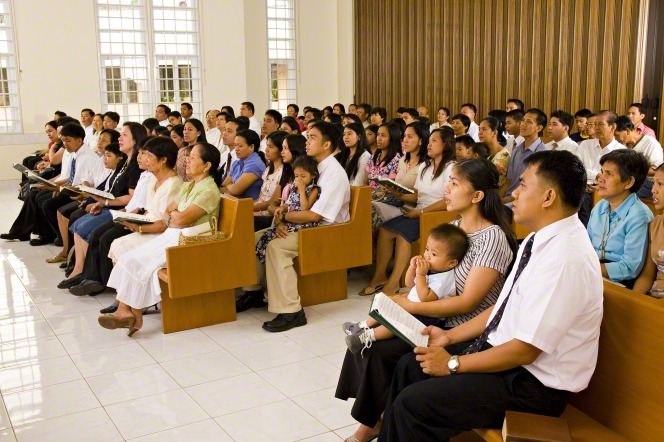
 How important is the Sabbath to you?
At our recent stake conference the visiting area authority 70, Elder Charles, spoke about the Sabbath*. He told us that in a change to previous practise, those assigned to attend stake conferences had been assigned the topic by the Brethren, and that in an increasingly secular world, our Sabbath observance can distinguish us from the world. He also told us we would being hearing more on the topic over the coming year. Several points were addressed.
The Sabbath is a Delight
“If thou turn away thy foot from the sabbath, from doing thy pleasure on my holy day; and call the sabbath a delight, the holy of the Lord, honourable; and shalt honour him, not doing thine own ways, nor finding thine own pleasure, nor speaking thine own words: Then shalt thou delight thyself in the Lord; and I will cause thee to ride upon the high places of the earth, and feed thee with the heritage of Jacob thy father: for the mouth of the Lord hath spoken it.” (Isaiah 58:13-14)
Elder Charles suggested that the Sabbath can be a delight when we meet with fellow church members. He delights in wearing his Sunday best. When we invite friends to church, we feel delight when they attend. We can delight in our observance of the Sabbath refreshing us. He reminded us that:
“The sabbath was made for man, and not man for the sabbath: Therefore the Son of man is Lord also of the sabbath.” (Mark 2:27-28)
My son is a priest and will usually bless the sacrament. I take delight in that. He does it very well. He also generally prepares the sacrament before the meeting. We don’t have that many young men. We arrive in good time; 30 minutes before the meeting is due to start. We have always arrived early. I don’t like being late for things, and for my husband, being late is the height of bad manners. That’s a Japanese thing. His father once sacked a driving instructor for turning up late. Our YM leaders send out an email each week, and have recently begun requesting that the YM aim to be ready and seated for the sacrament meeting 10 minutes before the meeting is due to start. Perhaps this is part of a wider instruction to Priesthood leaders given the next point covered.
Arrive in Good Time
When they go out to the cinema Sister Charles likes to arrive before for the start of the ads. Elder Charles said she liked to get her money’s worth, to have the complete cinema experience. It’s something I also like to do, though for the more practical reason of being able to see my seat before the lights go down. He suggested that when we are late for church we don’t get the whole experience, that if we arrive in good time we will have a better experience, because we will be able to prepare spiritually before the start of the meeting. I find that arriving 30 minutes early has the practical advantage that I can choose where to sit (an advantage that could be lost if everyone turns up early).
Elder Charles then went on to tell us that the training meetings the 70s have with the apostles begin at 8am, but that most people are seated between 7.15-7.30am. On one occasion he was ‘late’, and didn’t arrive until 7.45. No sooner was he seated than the meeting began. That gave me pause. I suppose if everyone was present then what’s the point of waiting? But if arriving early is meant to give time for spiritual preparation, then he just lost that 15 minutes. And where would it end? If everyone is 30 minutes early are they going to start at 7.30? Shouldn’t an advertised start time mean something?
He shared an anecdote about people being perpetually late for things, and a story about a harrassed mother getting everything ready for church whilst the husband sat in the car tooting the horn. He told us families need to work together as a team to be ready on time. His final point on the topic was that it is a point of reverence and respect not to be late.
The Sign of a Covenant People
We were told that the Sabbath is no more our day, than our tithing is our money.
“I am the Lord your God; walk in my statutes, and keep my judgments, and do them; And hallow my sabbaths; and they shall be a sign between me and you, that ye may know that I am the Lord your God.” (Ezekiel 20:19-20)
As a people who have made covenants with God, we are not simply volunteers.
Elder Charles spoke about something he called the ‘Just This Once’ syndrome, and related a story about a boy who had decided he would not play sports on a Sunday when 16 years old. He later joined the Oxford University basketball team. The final match was to be played on a Sunday, the team were a man down. He prayed about these extenuating circumstances. The answer he got was that he knew what was correct, why ask?
He also acknowledged that there are those who need to work on a Sunday. That there isn’t always something we can do about that, but that we need to be careful to distinguish between want and need.
The Cleansing Power of the Sabbath
Elder Charles pointed out that attending church on the Sabbath, partaking the sacrament, and meeting with fellow worshippers helps to free us from the stains and smudges of the world.
“And that thou mayest more fully keep thyself unspotted from the world, thou shalt go to the house of prayer and offer up thy sacraments upon my holy day; For verily this is a day appointed unto you to rest from your labors, and to pay thy devotions unto the Most High;” (D&C 59:9-10)
He put particular emphasis on more fully, recognising there are many things we can do, but Sabbath observance is important. He said that when he and his wife first joined the church in Britain, church members were quite poor. Today’s second and third generation members tended to be wealthier, and whilst there is strength from the support in multi-generational member families, problems may also be introduced. How well do we keep the Sabbath? He didn’t provide a list of dos and don’ts, but cautioned us to be sensible. He did mention a particular bugbear: buying things on the Sabbath. Six days in the week should be enough for shopping.
I was intrigued by this connection of ideas. My parents were converts. They raised us in a strong tradition of Sabbath-keeping. Like the song says, we prepared on Saturday for Sunday. I never dreamt of doing school work on a Sunday, not even during exams. As a student I would sometimes set my alarm for 2am Monday morning to get work finished, but I never did college work on a Sunday. This is something we have continued with our own children. That’s not to say my Sabbaths are restful. I like to be time efficient, so stuff that can be done on a Sunday, lesson preparation for church classes for instance, would tend to be allocated to Sunday, to make more time in the week for those things I wouldn’t do on a Sunday. Growing up we would occasionally hear whispered stories amongst church members about how terrible it was that those Utah members (sorry folks!) would sometimes attend church and then eat out in restaurants, didn’t know how to keep the Sabbath. So I’m wondering is this more relaxed attitude to the Sabbath now becoming more prevalent in Britain, and is that being seen as a bad thing by those in authority? I’d add a note that it wasn’t until 1994 that Sunday trading was legal in Britain, and even now is subject to restricted hours.
Elder Charles closed by emphasising that Sunday is the Sabbath day, a hallowed day.
- What does the Sabbath mean to you?
- How do you keep the Sabbath? Do you?
- What topics have been covered at your stake conferences?
- Is the emphasis on the Sabbath worldwide, regional or relatively local?
- What do you make, if anything, of the apparently new move of the Brethren assigning topics?
Discuss.
*It is interesting to note that Sister Charles spoke first on the related subject of the sacrament.
 Wheat & Tares
I know that our God has commanded us to remember the Sabbath day, and to keep it holy. I want to honor that commandment.
I do think my behaviour might indicate that the sabbath is less important to me than in the past, but I also wonder if my behaviour indicates a more rational approach. In the past people largely worked physically, and so wearing different clothes and physically resting would be practices that fed into each other. Now most of us work in front of a computer screen so rest may actually need to be more physical. I agree that a spirit of competition may not be appropriate, but a walk, a swim, even as we do working on our vegetable patch or on a community garden seem to me appropriate. Bringing up children in the church was gruesome on a Sunday-they couldn’t work on lessons or other church activities without a high level of input from us-exhausting. My heart sinks at the prospect of an entire day reading scripture, struggling with children and fighting with them over computer games. I feel like I’ve done my time,and am now refreshed by different things. I do draw the line at shopping, but will attend charity events as I see no point in not doing so as I might once have. It has only isolated us from our community.
For me, the struggle becomes is the Sabbath a Day of Sitting at Home in Your Sunday clothes or can it be a time of service of communing in nature, etc.
In the gospels, Jesus gets accused of breaking the Sabbath because he and his disciples walk farther than is dictated, eat corn from a farmer’s field and so on. I fear we turn that way.
When my mom was a young adult she joined the church, meetings were held twice a day, in the interim time, she and all the other young adults went out to burger shack for lunch. No one frowned on it. It was a regular deal. Then they went back to evening services.
When I was a kid, we still had 2 separate meeting times, but the idea of wearing your Sunday clothes all day was unheard of. We all went home and changed. In my family we played in the backyard to get our wiggles out. Or had a dinner on the patio with other friends we brought home from church. Vice Versa. Most Sunday’s we kids in my ward took turns going to each others house between meetings. We had lunch, hung out, played. Then got dressed and went back.
I appreciate a Holy Day, a quieter day – but I really am not comfortable with dress codes and other things. When I was a mom of young kids, Sabbath was anything but resting, especially if I did the wear church clothes all day.
For me, I would love if we emphasized service – that was what Christ was headed to when he got caught walking and eating corn. And a lift on the monk retreat style of being frozen in our white shirts and knee length skirts – staring at each other for endless hours.
I too want to honor the Sabbath, but not make it holier than thou idol worship.
I am not implying this post is suggesting any type of idol worship. I am taking that from other Area and GA talks on how to live the Sabbath.
Makes me wonder how the Sabbath works for those who are not accepted socially in their wards, but instead excluded?
However, it also reminds me of the need to get away and get our minds out of the day-to-day rut. That the Sabbath was made for man, not man for the Sabbath.
People need to back the frack off on chastising people for being late. I have six kids primary age and younger. We have 9am church. My spouse has meetings before church. We are late every. single. week. I can’t do it all on my own I am overfatigued. I never get enough sleep and I so resent having to get up early on Sunday.
I am late because I am worn out and have nothing left to give. It has nothing to do with respect or reverence. I am always late. My kids are tardy to school nearly every day.
Next person to try and publicly shame me for being late is getting kicked in the ahin.
We had a Stake PH Leadership Conference a week ago here in the Midwest with a member of the 12 and a member of the Presidency of the Seventy. Sabbath Say observance was one of the main themes and it was also explained it would be a theme for the upcoming year.
Two things were also mentioned by the visiting Apostle:
1. The need to limit the number of meetings held on Sundays. He admitted this is difficult as things currently stand but that the Brethren would be taking a close look at what could be done.
2. In an earlier meeting, a Bishop’s wife proclaimed loudly how much she hated The Sabbath. This gave them great pause.
My favorite description of the Sabbath = a temple in time.
Thanks for the comments.
ji, yes. It’s one of the ten commandments, and goes right back to the creation story.
handlewithcare, you make an excellent point about a different type of rest, I think. As a small child I didn’t especially enjoy Sundays, though since this was pre-consolidated schedule most of our Sundays were taken up walking (in good weather) to and from church, which was 3 miles away. So that was 4 hours physical exercise at any rate, and certainly wore us out enough that we weren’t too boisterous when we got there. When the 3 hour block was introduced, we were living closer to church, and had a car by then, there was more room to do other things, and we did spend time out doors after church, walking in the local country park, singing together while my mum played guitar, reading humorous poetry and monologues and laughing together, or visiting my grandparents, who were nonmembers. Those are things I look back on fondly. I’d like to get outdoors more after church with my own children, or even do the singing thing. That isn’t happening though.
And I agree that it isn’t a good thing to be so isolated from our local communities. As a child I really did feel that isolation.
Cat, great comment. Back before “wear pants”, I would get changed after getting back from church, because spending the whole day in a skirt was intolerable. Now that I always wear trousers to church I find I don’t need to get changed because I am comfortable in what I’m wearing.
I do know families who insist on Sunday best all day, but many people here do get changed when they get home after church.
“In the gospels, Jesus gets accused of breaking the Sabbath because he and his disciples walk farther than is dictated, eat corn from a farmer’s field and so on. I fear we turn that way.”
I love this. It can be a danger, particularly with this new emphasis. I think sometimes instead of asking ourselves am I doing this, when a principle gets this kind of emphasis, those who are in fact doing fine, feel they need to double down and find additional ways to show they are doing it right, and off we go down the path to an increasingly restricted and onerous Sabbath that is anything but a delight.
Stephen, yes. Those who feel excluded are not going to find delight in fellowship in their wards.
“it also reminds me of the need to get away and get our minds out of the day-to-day rut.”
It is refreshing to be thinking and doing something different to the rest of the week. It doesn’t always feel like it, when some church callings mean week night meetings and back again meeting on Sunday… I did sense some tensions between the idea presented as the Sabbath made for man as we’re told in Mark, and which Elder Charles used, and the next part of the address in which we were told our Sabbaths are not our own.
m, you sound in need of a hug, and some help. While I hate me being late for things, I don’t mind other people walking in to church late at all. And I am concerned about this what seems to be can we be seated and sitting reverently ten minutes before the meeting starts thing, which appears to be kicking off. Some people like that. I don’t think it will work for everyone. That’s an extra ten minutes to keep children occupied and reverent for starters. I’d also note that the section on time keeping didn’t come with any scripture reference to back it up.
Tim, thanks for confirming that this is being emphasised elsewhere. Looks like it could well be world-wide.
We have the north Europe area broadcast on 7 June, so given we’ve already been told we’ll hear more throughout the year, I’m wondering what else will be said on the subject so soon after our stake conference. It could become rather tedious. How many ways are there to talk about keeping the Sabbath?
“In an earlier meeting, a Bishop’s wife proclaimed loudly how much she hated The Sabbath. This gave them great pause.”
Hooray! Good for her. Things have to be especially tough for a Bishop’s wife & family. My husband is the exec sec in our ward, and his main task seems to be preventing the Bishop from scheduling too many after church interviews each week. One thing I have noticed amongst a fair few of my peers is an insistence on setting boundaries on our time in relation to church demands, something I didn’t observe in my parents’ generation. We experienced their service as children which took them away from us, and want our own children to experience something different.
Ellen, lovely.
30+ minutes early for church meetings? Good grief! In the military we call this “15-minutes-prior syndrome”, a form of mission creep where the commander dictates everyone be 15 min early for a formation, then a lieutenant demands 15 min before that (as a show of punctuality or initiative) then the sergeant demands 15 min before that, etc., and by the time the order gets down to the junior troops, there are people showing up 2 hours early to wait around and do nothing, and likely to get themselves into trouble because the leaders aren’t there yet. It also makes people overanalyze the schedule (“it says 8:00 but that really means 7:45”) and get confused. This is ridiculous.
When church nominally starts at 9:00, then there should be no more expectation than of being in one’s seat by 9:00. Once, while traveling in Utah, I decided to attend sacrament meeting at a local ward that was supposed to start at 11:00. I showed up promptly at 11:00 and saw that the meeting was already underway and they had just started the sacrament hymn. One of the regulars later told me the bishop was on some kick about always starting church 5 minutes early. I can imagine stuff like this happening in the Mormon corridor where bishops are trying to “out-righteous” each other. But how does this look to visitors or investigators? Anyone who isn’t “in the know” is made to feel awkward for showing up “late”.
And I really chafe at all this Church rhetoric about the Sabbath being holy, sacred, magical, etc. For those of us with kids, or a calling that involves working with kids, Sunday can easily be the most stressful day of the week. Apart from sending our kids away to boarding schools or indentured servitude, what can possibly be done about this? I just wish that in our Church culture we would stop pretending and just acknowledge the fact that for many of us, getting our families to church and back is physically and emotionally exhausting.
I agree with everyone who has said that the Sabbath is not so delightsome when you’re an active Mormon. It’s just another day of work for many of us. The best Sundays for me are when we’re snowed in and get to do home-church, which has the advantages of being shorter, more interesting, more uplifting, more age-appropriate, and usually ending with our favorite board games.
The other thing I wanted to say is that I lose my patience when male church leaders tell people to get to church on time. I don’t think they’re purposely being unkind, but they are very ignorant on this subject and should probably keep to topics they know something about.
It’s similar to if I, as a non-medical-person, tell a heart surgeon that she should be a little cleaner in the OR: “Boy, things are pretty bloody over there, even if you’re doing a great job otherwise. Can’t you be tidier? Maybe the scrub nurses could help you clean things up. And I’m not going to notice any of the hard work you put in to become a competent surgeon or to do a good job for this patient.”
Do the GAs go to their meetings early? Well good for them. It shows they can get themselves dressed and to work on time. Nothing amazing about that, especially because they probably have other people (wives) to do all the background work for them. I don’t see anything to praise there unless the GAs got their kids up, fed, dressed, and taken to school or daycare before they arrived so early.
Arriving to work on time by yourself is a completely different thing from getting yourself and other people ready on time for church. Especially when those other people happen to be nursing babies, messy toddlers, kids who don’t want to go to church, or kids who won’t get out of bed. We could also talk about caretaking for elderly parents, sick family members, or animals. And we should add transportation issues. And shall we discuss the expectations for female appearance on Sundays and how long it takes to achieve that? Being punctual is not as easy as it looks to someone who dresses himself, has no one else to take care of right then, and has a dependable car to drive.
Active Mormon husbands are often in church meetings before church, not out in the car honking the horn–at least in my case, the church made darn sure I didn’t have help on Sunday mornings. And what about the single moms and the women with non-LDS husbands? And truthfully, I don’t know that having the dad helping would make a difference: it might just mean having yet another adult losing their temper with a teenager who makes everyone late because she can’t get her hair fixed right.
Men who become GAs have been in church leadership for a long time even before SLC calls them up, essentially sitting in lots of meetings for years–they have not been down in the trenches with the rest of us. Assuming that many of the GAs have kids, it was their wives who got the family to church on time, not them. I would prefer any “be on time for church” talks to come from people who actually know what it takes to do that.
It’s not impossible to get to church on time under difficult conditions. I see other people doing it, and I did it for many years. But my kids made me realize that I had two choices: I could yell, cajole, and get mad in order to make them be on time. Or we could be late and remain friends. The latter was the right choice (my kids are my best teachers), and I should have chosen it from the beginning.
I am one who enjoys the break of a quiet Sabbath day. However, it seems to me that Sabbath observance, like many commandments, is very susceptible to hedging. A mindset where expressions of faith easily ossify into mandates of faith. As some of you have mentioned above. I think Jesus modeled the principles that should guide our varied and sincere devotions on Sunday.
I have personal experience with subjugating core Christian principles (kindness and patience) to the sovereign importance of punctual church attendance. Oh we were on time, but every one was upset with each other. I’ve been done with that for a while now.
Life happens, let’s just love. Tie or no tie, sleeves or no sleeves, late or on time.
“when a principle gets this kind of emphasis, those who are in fact doing fine, feel they need to double down and find additional ways to show they are doing it right”
I think that is the core of many outrageous actions we see in the church, from rules about t shirts over bathing suits to the idiocy of arriving at meetings 45 minutes early. Jack Hughes perfectly summarized it with his story about the military. It’s mission creep, it’s building hedges around the law, it’s irritating.
I agree that it’s a good idea to try to be on time to Sacrament Metting and other Sunday activities, but many of us can’t always do that!
Personally, I am not bothered by people coming in late, I don’t really even notice it much of the time.
But, honestly, who cares? There are so many other things that we need to be concerned about in our daily lives, rather than those people who come in a little late! Those in our wards that insist on being part of the ‘on time police’ (including Priesthood leaders) should back off and chill out!
I also agree that the Sabbath is a special time. I am one of those members that often has to work on Sundays during church time. This is something that I can’t avoid. Because of that, Sunday’s have a greater meaning when I can be a part of the ward community, so when I am able to be there at all, I am not worried so much about getting there before it starts, just happy to be able to go!
I heard that the Sabbath was a new “emphasis” for the coming year as well. I had a sigh of relief bc better that than the gay marriage stuff I’ve been hating.
I do think I can be better at honoring the Sabbath so I kind of am looking forward to it. But I also agree with prior commenters: that which we emphasize turns into a crazy letter of the law thing. So (shrug)?
Jack, thanks for giving the phenomenon a name: “15-minutes-prior syndrome”. Starting a meeting early is bad enough when it’s a closed meeting, and it’s known when everyone has arrived. But starting a sacrament meeting earlier than the publicised time is well out of order I think, and extremely unwelcoming to those not in the know.
Anarene, good point on whether those in high leadership positions have much experience on getting their children ready for church.
I recall I was frequently the last to get in the mini-bus before we left for church, as a teenager, fixing my hair and make up. Now it’s my daughters turn. I’ve found it much easier and less time consuming not to bother with make up, and keep my hair short and easy to manage. For me life is just too short to stress about expectations for female appearance.
We also had this topic for our stake conference, but there was additional information that got many of us excited: The policy is changing so that sacrament meeting programs are to be planned by the ward council rather than the bishopric.
Which means that women will directly be in charge of planning sacrament meeting programs, and a burden is lifted from the bishop, allowing more time for ministry.
“Makes me wonder how the Sabbath works for those who are not accepted socially in their wards, but instead excluded?”
I guess I am not understanding how this matters, since it is about worship? But having generally been an outsider, maybe clueless as to how things could be better.
Vinz, yes. Especially “A mindset where expressions of faith easily ossify into mandates of faith.” This happens too much.
And: “Life happens, let’s just love. Tie or no tie, sleeves or no sleeves, late or on time.” This is lovely.
Vinz & KLC. And wasn’t it the hedges about the law that Christ took issue with?
Doug “But, honestly, who cares? There are so many other things that we need to be concerned about in our daily lives, rather than those people who come in a little late! Those in our wards that insist on being part of the ‘on time police’ (including Priesthood leaders) should back off and chill out!”
Yes. It does set up judgement of those who are late, when time keeping becomes an issue. Folk know when the meetings begin. They’re all adults. Leave them be.
Kristine: “I heard that the Sabbath was a new “emphasis” for the coming year as well. I had a sigh of relief bc better that than the gay marriage stuff I’ve been hating.”
We haven’t had too much of the gay marriage thing at church here in Britain, thankfully. I do think the Sabbath is important. I hope the emphasis we see further is more neutral on issues such as time-keeping, and instead we can look at how we can improve the Sabbath worship experience for everyone, help everyone to feel welcome and included. I hope we won’t go down the road of suggesting that those who arrive later are spoiling it for others. In fairness that wasn’t what Elder Charles was suggesting; he felt that arriving earlier would improve the experience for those who were usually late. I think the individuals themselves are probably the best judge as to whether it will or won’t.
Naismith: “there was additional information that got many of us excited: The policy is changing so that sacrament meeting programs are to be planned by the ward council rather than the bishopric.
“Which means that women will directly be in charge of planning sacrament meeting programs, and a burden is lifted from the bishop, allowing more time for ministry.”
Thanks for adding that information. That is really exciting.
I wonder how that will work with music. Currently music has no representation on the ward council, other than through the Bishopric member responsible, who often is clueless about music. Something I’ve complained about before. I do think they’ll need to invite the music chairperson to the planning.
What does the Sabbath mean to you?”
How do you keep the Sabbath? Do you?
What topics have been covered at your stake conferences?
Is the emphasis on the Sabbath worldwide, regional or relatively local?
What do you make, if anything, of the apparently new move of the Brethren assigning topics?
I’m with Kristine A – a topic I can enjoy! I really value the respite that Sunday brings. It just feels different to me, like a real break, because we don’t go to the store or to eat out (although on the downside that means I have to cook – hardly a break there!). My only two objections are that we have afternoon church (that third rotation is a killer. We just sleep in longer, and then by the time we get home, it’s too late to enjoy family time, and the kids have homework usually).
The other thing that I appreciate about it is that in general, the folks in my ward have a reasonable attitude about it. The Sabbath is not some hair shirt of personal sacrifice. How do we delight in something that is entirely sewn up of misery and deprivation? People do handle emergencies without too much consternation or judgment, and generally speaking if you are on vacation, you go out to eat and might do some things for leisure. When our house flooded on a Sunday morning, we immediately had volunteers from ward members to come right over and help out. That’s Christian charity!
Naismith, so the burden of planning sacrament meeting is now lifted off the bishop? I suppose that’s one way of looking at it, although in the ward I live in the bishop’s counselors do all of the sac mtg planning and execution so the bishop has no burden to begin with. Another way of looking at this is through the eyes of the members of the ward council who already have fulltime church jobs and are now being handed one more, just like the elimination of activities committees did a few years ago. The YM and YW presidents already have Sunday responsibilities, weekday responsibilities, summer responsibilities, weekend responsibilities, why is it such a great thing to give them sacrament meeting responsibilities too?
Hawkgrrrl, sounds like a great ward. Your tale of the flooding reminded me of an event in my childhood. It was a summer evening and we were going to sacrament meeting. It had hot day. We were just at the top of the hill, almost at church at the bottom of the hill, when the skies opened in a sudden summer shower, and by the time we reached church we were all absolutely soaked to the skin. So they delayed the sacrament meeting, and had us change into dry baptismal clothing for the meeting, and one of the sisters who had a dryer took our wet clothes to her home to put in her dryer so that we could wear them to go home afterwards.
I heard about sac meetings going to ward councils as well . . . it will be interesting to see how that plays out; I can see definite pros and cons.
KLC, well that’s one point of view. But I can say that when I was music chair I would have loved to be allowed to pick the speaking topics at least, and have the hymns I want without the extreme oversight I had to put up with.
which reminds me of a point I forget to mention in my #24 – getting approval for the programme. Will the Bishopric have to approve every last detail? Because getting approval for music items took way longer than necessary as it was. If getting the programme approved is anywhere near as bad as my getting music items approved was for me, then the ward council are pretty quickly going to turn around and tell the Bishop to do it himself.
I have to admit that I don’t feel that Sundays are wonderful. As a kid they were a bit of torture to stay in chairs for hours and at home we couldn’t do anything. They were NOT spiritual.
Then as an adult as I have served in many callings, the huge number of 6:30 AM every Sunday bishopric meetings just made it another day. The only frustrating this is if I did manage to get a bit of time to do something, the highest priority task was a Sunday no-no. So I would just nap the day away, take a sleeping pill to get to sleep at a good time so that I at least could start the week out with enough sleep, because it would probably be the only day to get anything near enough rest. I sure hope the “reduce the 3 hour block” rumors have some truth to them. It seems like we could fit more wards into fewer buildings.
KLC, I am glad that your bishop has been able to delegate this. When my husband served, he counseled with his counselors, but ultimately spent part of every December/January on his knees praying about what should be discussed in Sacrament meeting, and came up with a schedule for the year. It was a burden, and came at the same time as tithing settlement, so we always tried to take off a holiday weekend in late January to have some family time together.
He and his counselors each took a month of conducting and making arrangements, but he prayed over the topics in a very intense manner. Maybe he was incompetent or maybe that is what he was told to do at the time.
Our visiting GA a few months ago was Elder Evans, and he reinforced the power and strength of councils in doing the sacrament meeting programs, so I think it is a shift.
When I was a RS president, I had an “Assistant to the President” called to help with such projects; some people call two secretaries. Hopefully the YW leader would turn one meeting over to the YW themselves to plan.
I think it is a great thing to get more people involved because the more chance of including things that would appeal to a broader range, and to avoid being offensive. During the first USAmerican Gulf War, our ward tried to do a special sacrament meeting honoring veterans. There was a slight problem, in that the speakers (all male) included a male who was a reservist and had taken the government’s money for years but declined to serve when called up because it was inconvenient for his medical residency. He pulled all kind of while male privileged political strings to get out of going. Yet there were three female veterans in the congregation who had honorably served, yet none of them were asked to speak. So I was offended by his inclusion and the women’s exclusion. When I asked the bishop about it, he freely admitted that they had made a mistake and looked weary (perhaps the other two had already talked to him). Since the RS president was an Army retiree, it might have had a different outcome had the topic been discussed or planned in a council situation.
I appreciate that everyone on ward council has a full plate, and of course smaller branches have special concerns.
I am loudly championing the getting to church still friends with our kids concept. Wish I knew that twenty years ago. Getting to church still loving your husband might be a good one too. Meh.
Anyone remember prayer meetings? The meeting before the meeting to prepare you for the meeting? I’m guessing we might see their return.
All come under the heading of ‘other people’s projects’ for me now, and we conduct our family as we see fit.
Felt I should add that the closing talk of the general conference was on the topic of the Sabbath: https://www.lds.org/general-conference/2015/04/the-sabbath-is-a-delight?lang=eng, and does address to some extent the tensions in the Sabbath as a delight but not for our pleasure. In it the time set aside on the Sabbath is compared to tithing, but isn’t as forceful as the sentiment expressed by Elder Charles outlined in the OP.
And that we had great talks in sacrament meeting on Sunday, and if those are examples of more speaking about the Sabbath, keep them coming – one of the youth spoke about the sacrament, then there was a lovely nuanced talk about what reverence really means, followed by a talk on receiving personal revelation, and reverence (the nuanced variety) as a precursor.
A Happy Hubby, my son likes to catch up on sleep Sunday afternoons, and my husband can sometimes be found napping.
Naismith, interesting detail. Thank you. At risk of being seen as harping on about music I really hope the music chair can be involved. Nothing worse than being responsible for music but not being allowed any input, and essentially have other people tell you what they think the hymns should be. I’ve always approached the selection of hymns in a way similar to that you describe your husband as having done for the topics. It does help to have the topics to do choose the hymns. But then I would ponder over the hymnbook seeking for the best hymns that felt right spiritually for the meeting and felt right for the position they occupied in the programme (opening, intermediate etc.), similarly with musical items. To create a coherent experience in the meeting. It was very galling to then have a speaker then come and ask for a specific hymn (I usually refused because the selection was carefully balanced as whole). The last time I had some responsibility for this, the oversight from the Bishopric was horrendous, and I am sure made a lot of unnecessary work for themselves. If only they could have brought themselves to trust me to do the job. It was particularly bad, because I was training the chorister in selecting the hymns, she was still in YW, had spent most of her life in the ward, so had a better grasp than me when it came to which hymns were better known, and they basically destroyed her confidence in listening to the spirit in selecting the hymns, and her selections were wonderful.
handlewithcare: “other people’s projects”
Love it. There are so many things that can come under this heading. Being expected to interupt our own daily family scripture reading pattern because it’s been decided ward members should all read the BoM before Christmas is one example that springs to mind…
my Sabbath day observancehas taken a huge nose dive in the past year.I’m blaming it all on becoming an empty nester, moving, and being released as relief Society president. the mister and I usually make it to sac meeting and then go out to lunch. ironically though, I am feeling much much happier.
My sisters ward has a Sacrament Meeting Planning Committee. They plan the program outlines, extend the talk/music requests etc. The month previously they send their plan to Ward Council, it gets yayed and nayed where it needs to – takes 5 min.time and everyone seems pleased with the results.
In addition to GAs having callings that generally exempt them from getting kids ready in the morning, we have this tradition where they sit on the stand, often so relaxed that they fall asleep, while their wives wrestle with the children for the whole meeting. Trying to silence my kids for a one and a half hour meeting where anything that might interest them, like visual aids and multimedia presentations and most forms of music are expressly forbidden is bad enough. Adding a half hour of early bird mandated quiet contemplation sounds like torture. Maybe if we had priesthood leaders sit with children we would not only get more practical advice, we would get shorter, more interesting meeting formats.