

This week two anti-Mormon Feminist stories popped up in my FB news feed. Whether women are 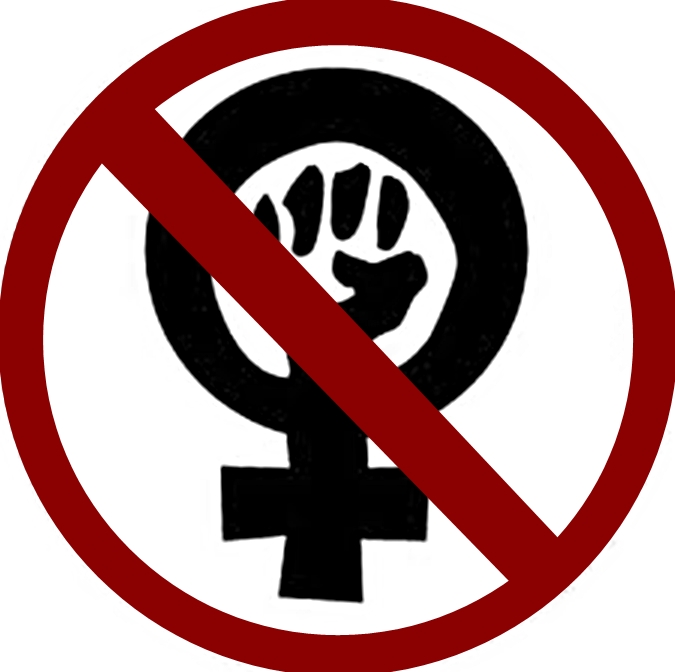 refusing the label mormon feminist (1) or women are labeling themselves as “maternal feminists” (2) defending motherhood at the UN, there’s been quite the dust up amongst friends about this f-word this week. Below is an abridged version of my first post as a mofem on my personal blog and subsequently on Confessions of a Moderate Mormon Feminist back in September 2013.
Yes, for the first time in public, I have claimed the title of feminist. A Mormon feminist.
In Mormonism, feminism is an “f-word.” And I twisted and spun and bent myself in an attempt to not label myself as such. I’ve called myself a feminist-ally or -empathizer. Most recently I’ve come to most closely define myself as ‘one who advocates for change and improvement of gender inequalities within my Mormon culture and Church – WITHOUT changing the principles and doctrines of the gospel’.
I looked myself in the mirror and said, “Self, sounds pretty much like the definition of feminist to me.” And so I am. To think that all feminists are the same is rather simplistic. Like calling all fish only “fish” whether it be salmon, trout, angelfish, cod, sturgeon, goldfish, or shark. We have liberal, social, radical, militant (the “feminazis”), marxist/socialist, cultural, eco, and a peculiar mormon type of feminism. And amongst mormon feminists there are a thousand different types of us, too – just like there are marble, cut throat, rainbow, brook, and bull types of trout!
Because of this over-generalizing and stereotyping of the word and all it’s negative connotations: It’s terrifying to claim Mormon feminism. I grew up hearing about the “evils of feminism” and the destruction it reigns on the family. I knew women had been excommunicated for feminism. Mormon feminism is a dangerous place to be – we open ourselves for judgment and ridicule, as evidenced by a recent Sabbath lesson I ended up walking out of when the teacher claimed, “women who wear pants to church don’t understand the Plan of Salvation.” I mean, really, just because my friends wore pants means they don’t believe in this?
 When I was present at April General Conference to see a woman pray there for the very first time…tears of happiness were wept that there is one less thing that my daughter will NEVER see she can’t do by the mere fact of her being a female. I was enveloped by a sweet feeling of love from my Father in Heaven. And as I left that historic meeting I had a conversation with a friendly elderly usher who made sure to share his opinion that anyone who was happy to see a woman pray is only one step away from apostasy. {sigh}
But I know God lives and loves me. I know Jesus Christ is the son of Heavenly Father and Mother and that He is my Savior. I know my Savior walked the earth. He established His church here with apostles and bishops. He did not come to minister to the well but to the sick and lowly and in need. In His actions and teachings I see the Gospel’s first feminist, as his actions regarding females were groundbreaking in his cultural and historical context.
So what happened in my life to turn me to Mormon Feminism? Well, God did. I’m serious. Fifteen years ago I was about as a culturally and religiously conservative zealot – the only hope in my life growing up was to be a Mother in Zion: barefoot and pregnant. I was taught this was my role, Heavenly Father’s plan for me. This was God’s plan for all women. As I chased this elusive dream, I faced years of God’s plan of infertility for me instead, and I came to a realization: my identity and worth and role in this life wasn’t limited by my ability to bear children, by my femaleness. God sent me here for MORE. I wasn’t sent here to endure to the end of this trial so I could be granted motherhood in the eternities, as I was so often told at church. I was sent (as we all are) as a Child of God with a unique spirit full of strengths and talents that God wanted me to use to build the Kingdom of God. Sometimes that includes being a mother and sometimes it does not. Heavenly Father gives us all personal revelation to help guide our path back to him.
Because I couldn’t have children, I have earned a bachelor’s degree in accounting; have had the opportunity to work full-time for an apostle, celebrity, and community housing agency; and have been exposed to so many types of people, ideas, and value systems to make my head spin. Heavenly Father’s plan for my life has led me to have been close friends with millionaires, democrats, homosexuals, alcoholics, and tree-huggers. His plan has included 4 time zones, IVF, foster care, a failed adoption, and acceptance of mother of a only child. Meanwhile I have served as Relief Society President, Primary President, Gospel Doctrine teacher, and a variety of other teaching and leadership positions. I’ve worked amongst the priesthood leaders and administration of the Church. I’ve witnessed miracles happen and prayers answered – and I’ve been the recipient of gender discrimination several times, enough so to see it as a systemic problem instead of isolated incidents. All of these life experiences have changed who I am, how I think, and what is important to me. It has changed the filter with which I view the world and eternities.
So I’m different. And this different brain with different life experiences has led me to study prophets’ words and church history that has given me different answers than what I learned growing up. The organization of the Church taught me a lot of things over my whole life. Most things were accurate and doctrine, and some things were opinion, cultural traditions, and good intentions gone horribly awry. Through my study my faith has been strengthened. I’ve learned that faith must be about the content of divine revelation, not the means or humans by which it is revealed.
Do I believe Joseph Smith had a vision for the women’s Relief Society that has become unrealized? Yes…
Do I believe the prophets and apostles have taught that God the Father has an equal in God the Mother who is His co-creator? Yes! (“A Mother There”: A Survey of Historical Teachings about Mother in Heaven; David L. Paulsen & Martin Pulido. BYU Studies Journal 50:1)
Do I believe there are changes that can and should be made in our church’s programs to equalize the funding and structure of programs between males and females? Yes!
Do I believe we need to change the conversation of shame and fear that surrounds our teaching of modesty and sexuality and causes more problems than it solves? Yes!
Do I believe there are some positions in the church that don’t require the priesthood that can be done by women and have been done by women in the past (Sunday School Presidency, anyone?)? Yes!
Do I believe there should be more female representation in decision making boards and councils of the Church that are over mixed-gender organizations (Welfare, Church Board of Education, etc.)? Yes! The Church has already started making this change with the new organization of “Mission Leadership Councils” that have sisters equally represented.
Do I believe women should be ordained to the priesthood? Eh…. Now? No. In the future? Perhaps. After studying all the divine powers Heavenly Mother has and uses, all the words I hear in the temple and women I see administer, I believe it’s a probable that women will be ordained and will use the priesthood, whether in this life or the next. Knowing what I know of my fellow saints and Church leaders – if this is to be a change of new revelation, do I believe that now is when it will happen? No. I don’t consider the question of female ordination to be central to my faith or feminism right now.
And so I stay without voting with my feet. I believe we are to use our spheres of influence to do the best good we can. I feel I’m anxiously engaged in a good cause.
__________________________
(1) I think this essay is partly in response to FMH and Hawkgrrl’s posts about Mormon feminist having a hard time at the temple. She seemed particularly strident in making sure she saw no sexism in the temple.
(2) grrrr, “maternal” feminists – I can’t even with this right now
 Wheat & Tares
Mormon feminism is like the optical illusion of the old woman and the young women, those who can see that women are one down in the church and are honest with themselves about it are feminists, those who can’t or deny it aren’t.
“(Sunday School Presidency, anyone?)? Yes!”
I’ve held various positions and the church and realized there are only a few that really matter. The rest have an important role, but in the final analysis aren’t that impactful. We are told callings are the body of Christ and each plays its critical role. As with a body, certain parts play a more vital role. Here is my observations, on a ward level, of those callings that are the most impactful starting at the top and working down.
1)Bishop – by far the most important role as he makes the final decision on all assignments and worthiness;
2)Relief Society President – plays a critical role in the temporal well-being of all women and their families, assigns visiting teachers and calls teachers;
3)Young Men/Women President, Bishop Counselors, Relief Society Counselors, Young Men and Young Women advisors – have a huge impact, especially on the youth, and advisory roles with the ward leaders;
4)Teachers – A well prepared lesson can be really impactful;
5)Quorum Presidents—can have an impact with home teaching assignments.
Every other calling is about equal after this point, at least in my opinion, including clerks, nursery, Sunday school president, ward missionaries and leader, librarian, etc. Important, but not that impactful on peoples everyday life.
In stark contrast, the role parents can and should play in the life of their children is way more impactful than any of these callings. They all come and go, but parents have way more impact either for good or evil. And, in my family growing up and my current family the mom played a critical role. In my judgement, at least equal to the father.
So I am asking, what you are really seeking? I don’t get it and from my analysis, I don’t really see the role of women being any less than that of a man, in the church or at home. In my opinion, the calling of Sunday School President is on par with the Nursery. The sole exception would be the role of a Bishop, which is by far the most important calling in a ward. However, is that a role you really want? Seriously?
Ken,
First, I completely agree that RS president comes right after Bishop. However after that I would bring up the EQP. Yes, most wards don’t use the EQ as they should, but apart from the bishop he is typically the only adult priesthood key-holder in the building. EQs should be doing much more – a principle I’ve heard reiterated by many general authorities.
Second, I’ve sat on ward and stake councils for the last decade. During that time I’ve seen a real push in the church to have these counsels run the ward/stake, partly because bishops and stake presidents are overworked, and partly because revelation comes better through committee.
So for me, the main advantage of allowing women to serve as SS Presidents is that they would be on the ward council. Even more important, IMO, would be allowing women to serve as executive secretaries and clerks, because that would bring women into bishopric and stake presidency meetings. Even though these women would not be true “counselors,” their presence would allow them to effectively function that way and greatly improve these bodies that – unlike ward and stake councils – currently have zero women present.
Third, I certainly would love to see women serve as bishops. Granted, no one should aspire to a specific calling (hence its unfair to ask Kristine A “is that a role you really want”), but there is a difference between personally aspiring to a calling verses recognizing the value of removing gender barriers to a calling.
Women are great leaders. And many women have a valuable asset that men at this time do not – time. A 55-year-old female bishop who is not currently working full-time and who no longer has children at home, would have significant advantages over the typical 40-year-old man who has both a full-time job and 6 kids under his roof. He’d be much better suited for nursery.
Finally, you’re absolutely right that all of this calling-talk pales in comparison to the importance of family roles.
For me, the
Dave,
“hence its unfair to ask Kristine A “is that a role you really want”)”
That is the issue though. The real, sole searching, when you are alone, what really matters question is:
“Where can God best use me to a have positive impact on others?”
A righteous mother can have WAY more impact than any Bishop on the lives of her children. Those children, in turn, can have a huge impact on society. Too me, some of these women are asking for something they consider to be equal, but in reality is less important all things considered.
Ken, you’re missing the point. There is a difference between aspiring to hold priesthood office (something which was counted as righteous for Abraham to do) and aspiring to hold keys to direct as specific quorum or body at a specific time (e.g., the SLC 1st Ward Bishop).
I fully agree that women have more eternal impact as mothers than as bishops. The same is true for fathers. Yet I hope that my sons will aspire to hold priesthood office because it will allow them unique ways to become as the Savior (through literally do his works) and also because it will make them better fathers. For the same reasons, I hope that my daughters will aspire to hold the priesthood.
Priesthood and motherhood are just like education and motherhood. Far from being incompatible, they build on each other.
Ken, why do you want to deny women the opportunity to serve in the church?
Ken, I don’t give a rip if I never serve in any of those callings. But I don’t think the members of my gender should automatically be excluded from them by their mere female-ness, especially when the positions have nothing to do with administering priesthood ordinances etc. Think about it — we have women serving on the GENERAL BOARD of the Sunday School, yet don’t allow them to serve in any of the positions in the wards.
I think men should be able to serve in Primary Presidencies. My husband is a ward clerk and women could serve there. By all means if it’s an organization that is all one gender, that gender should serve in those positions. If it’s a mixed gender organization – limits are pointless.
And don’t give me that BS of we can’t have mixed genders serving together. For at least a decade before the last handbook update there was no gender restriction in SS Pres and generally a woman was always called to be the secretary in all the wards I was in. If we survived for years with women in a support position in these presidencies there should be no objection to having a woman serving as the one leader of the rest of them–bc we’ve already shown sex doesn’t break out spontaneously in mixed gender presidencies. At least in the wards I was in. YMMV.
So you ask what I’m really seeking? I’m seeking for us to root out the traditions we have that aren’t based on doctrine and begin to remove the blinders from our eyes and remove limits instead of creating more. To expand our vision of the purpose and role of women.
This doesn’t lessen the importance of motherhood. Does your priesthood service lessen the importance of your fatherhood? Than why would expanding the ways women can serve lessen the importance of motherhood? It won’t.
And I’d like to add that my husband’s fatherhood is just as important as my motherhood. A father has just as much influence and importance as a mother. The problems with fathers abandoning their families are well established statistically in research. This whole “mothers” are the most important thing is bull honkey. Both are the same importance.
Whoa!
“Ken, why do you want to deny women the opportunity to serve in the church?”
And
“And don’t give me that BS of we can’t have mixed genders serving together.”
When did I say or even imply any of this? I simply said, the most important calling one can ever have is to be a parent.
I further set what I think are the most impactful jobs in a Ward, with women playing significant roles on that list.
Ken, I know you didn’t say that…I responded to you then went on to pre-empt all the arguments that I most often get back.
You said that motherhood had the most impact and in the last comment you changed it to parenting. At least we’re making progress guess here. Now if a man’s fatherhood isn’t lessened by greater service why would a mother’s be? What’s the hang up with expanding the ways women serve bc motherhood?
Kristine, I pretty much agree with every position you’ve taken in this piece, and I have four daughters whom I love and respect and for whom my heart yearns for a full and joyful life, yet I would not claim the title “feminist”, and I’ll try to explain why.
First, the whole point of a title like that is to mark a boundary between groups of people, and exactly what that boundary is is up for debate. I’ve had self-proclaimed feminists explain to me that a feminist is simply a person who believes in maximizing opportunities and choices for women. Well, presented with that definition, I think most Mormons I know would be suspicious. “Why?” they’d wonder, “don’t we all believe that? So why do you have a label? What’s the difference?” And then they’d dig deeper and the differences would likely be one or more of the following:
1. Beliefs in gender roles of any sort
2. Beliefs in general or statistical differences between the sexes that could justify treating them differently in any situation
3. Beliefs in whether acknowledged differences are inherent, simply socially re-enforced, God-given, or something else
4. Beliefs surrounding the value and appropriateness of sex-segregated spaces
In other words, some of us who hesitate to embrace the feminist label don’t want to be grouped with those who won’t be satisfied until women are ordained to the priesthood, PH and RS are merged, gender roles/expectations are eliminated, and men and women are viewed as less dissimilar than two crayons of different colors. (By the way, I’m fully aware that many reading this will be thinking “Of course, that’s what I want!”, and that’s fine, I just don’t agree with you)
Second, I’ll admit that the term was poisoned for me growing up. A woman in our ward with 5 or 6 kids up and abandoned her husband and children. She’d gone to a feminist retreat, taken some fulfillment or empowerment classes, decided she was unhappy, and left. She’d decided to become a liberated woman, so she shacked up with some guy in a neighboring city and left her husband to do his best to hold together what was left of his family. Obviously there’s got to be more to the story, but as a kid (age 10 or 11), that is what I saw, and nothing seemed more horrifying to me than a mother abandoning her children. Even with greater emotional and intellectual sophistication, to this day I can’t quite separate “feminism” from selfishness and pride.
Maximizing opportunities for fulfillment and happiness for women seems inherent in the gospel to me. I realize that many changes have occurred in the church due to the efforts of self-proclaimed feminists, for which I am grateful. They’ve opened doors for my daughters that God clearly meant to be open for them. They’ve asked many questions that needed to be asked. But I also think that given their head, feminists would trample roughshod over things I think are very valuable and God-given. Maybe not all self-proclaimed feminists would, but many. Consequently, the title doesn’t fit me, because I don’t feel I belong it that company.
Kristine
Let me phrase this another way. If you take the Bishop out of the equation, tell me how a Woman’s contribution in her calling in a ward is any different or of less importance than a Man’s?
First, I did not find the first “anti-feminist” article pointed to in the OP to be anti-feminist. The author shared why SHE had made the choice not to self-identify as feminist. She seemed much more of a non-feminist, and only in a black-and-white world would she be an anti-feminist.
Many people inside and outside of the church have chosen not to self-identify as feminist for a variety of reasons. One of them is Stephanie Coontz, whose excellent work on marriage was widely quoted by another W & T blogger. I met her last year and was a bit surprised when she said she no longer identified as feminist because of the “baggage.”
So please don’t make out that “over-generalizing and stereotyping” is all in our heads if we don’t jump on the f-bandwagon. I’ve had classes in women’s studies, I’ve belonged to feminist organizations. I do understand it; I am not ignorant. A lot of the concern is very real and due to some of the loud, anti-family proclamations of self-described feminists out there. Some of which have horrible consequences in the lives of women. (The apology to moms in the March 3 Fortune article was very revealing about the anti-family attitudes of many decision-makers.)
In my case, the president of our local NOW called me out by name in a letter to the editor of our local newspaper and said I was not a feminist. It is not worth fighting over.
I do serve on the board of a community group that works with feminists all the time on issues of common concern. And I am happy to work with MoFeminists on common interests as well.
And let us also be clear that no Mormon woman has ever been excommunicated for being a feminist. Some feminist women have been excommunicated for things like influencing members and nonmembers to oppose Church programs—i.e. the missionary program, advocating diminished support of Church leaders and presenting false doctrine which would damage others spiritually. (I believe those were the issues in Sonia Johnson’s case.)
I believe most of the same things in the OP, but I am not a feminist. I will not be bullied or made to feel less because I don’t agree with you on this.
Without trying to be combative, I honestly don’t understand how men in the church can’t see women’s perspective on this issue. I’ve heard a thousand times in the church that the greatest opportunity to serve in this life is through the righteous exercise of priesthood. Priesthood is only for one purpose – service. The priesthood power is how miracles are performed, it’s how god created the heavens and the earth, it’s how people are converted to Christ, etc. How can anyone build up the priesthood, and the authority to exercise it directly, not merely the indirect power, in such a manner, and then turn around and scratch his head and act confused as to why believing women would want to hold it? Women wanting to hold the priesthood seems like a no brainer, from a logical perspective. Now, from a gospel/faithfulness perspective, if one believes that’s not god’s order, then that’s another question. I think that’s a consistent position. But to not be able to see why a woman would even want it, smacks to me of willfull ignorance.
Naismith, I don’t always agree with you, but I feel compelled to note how correct you are on one point; specifically, that one can reject the title “feminist” without thereby becoming an “anti-feminist.”
Unfortunately, we’ve seen this same fallacy in recent comments by Elder Oaks, who has taken to labeling all those who do not believe in God as “anti-christs.”
Why the angst?
1. Feminists support causes like gay marriage and abortion
2. We are commanded to pray to the Father in the name of the Son. Feminists want to pray to heavely parents or goddeses
Feminism is at odds with the LDS Church
Naismith, my best friend refuses to claim the label feminist for many reasons, even though her wearing pants to church while serving as nursery leader was one of the things that began my questioning gender expectations in the church. I’m not out to do forced feminist can’t nversions and make people adopt the label.
I am out to show the wide variety of positions of women who claim the label. Sometimes labels are helpful. I would label myself the following: Christian, mormon, idahoan, Pacers fan, Duke fan, accountant, SAHMS, etc. All of these things help describe who I am, and many of them come with negative connotations. I chose the label feminist, not to divide people but to be authentic, and I found a supportive community of people who understand, even though they disagree on details.
I labeled those articles as anti-feminist because they specifically don’t want to be one of “those women”.
Kristine A, a Pacers fan? And Duke? To think I had so much respect for you.
Ken I never said anything about importance of callings, ranked. You’re the one talking about it. I’m not.
I’m talking about removing traditions that limit the spheres that women can serve and influence.
And let’s be done with the women’s sphere = motherhood thing. There are plenty of singles, childless, emptynesters, etc. whose ability to serve others with their time and talents could be expanded. Even with the mothers, what with this be a good mom OR have another calling? Isn’t it AND? Men are good fathers and have big callings? We need to drop the OR.
Dave K: Reggie Miller Madness and Laettner-ball both peaked in the early 90s, the age I was choosing my lifelong fandoms. Timing is everything.
“I am out to show the wide variety of positions of women who claim the label.”
So then, it doesn’t really mean anything? Because when feminism is everything, it becomes nothing.
“Ken I never said anything about importance of callings, ranked.”
That is exactly what you are saying in your post and in your comments. You are saying women should have “big” callings AND be mothers as indicated in your next few paragraphs after this quote. “Men are good fathers and have big callings?” Whether you realize it or, that is precisely what you are arguing. Because if there are “big” callings, then by definition there are ‘little” and thus ranking.
I am with brjones statement as I think it is God’s order. I am further saying, women have as much opportunity for service as men in the church and can and do have as much influence. It really depends on what is deemed important.
And Go Utes, I hope the crush Duke!
In response to this…
“So I am asking, what you are really seeking? I don’t get it and from my analysis, I don’t really see the role of women being any less than that of a man, in the church or at home. In my opinion, the calling of Sunday School President is on par with the Nursery. The sole exception would be the role of a Bishop, which is by far the most important calling in a ward. However, is that a role you really want? Seriously?”
I think that argument misses the point. I am not aware of any feminists advocating for individual callings. (Kate Kelley for Seventy, everybody!). Rather, they advocate for the elimination of the exclusion of all women from key positions.
That is a rally I can get behind. Even with my most believing glasses on, I see room for prayer, hope, and even faith that a religion that believes in continuing revelation can change its structure. Ezra Taft Benson believed that the church progress would be limited unless the Book of Mormon was utilized more. Personally, I think that we limit ourselves more by excluding 50% of our talents from the key councils and leadership positions. Am I wrong? Possibly. But it is also possible that the highest church leadership has not collectively reconsidered the cultural biases in which they were raised.
Considering a change from the status quo would require unanimity, I think we are a long way from seeing any change, even if the change is warranted.
The debate about whether or not we need more female leaders in the Church is so incredibly tired. Last Sunday in my ward we had a Priesthood leader get up in sacrament meeting and do a sales pitch for Friends of Scouting. Meanwhile, our YW weren’t allowed to sell treats in the foyer to raise money for Girls Camp because the Stake Presidency told them it was inappropriate. Mileage varies in every area, but for two years I served as one of three women on our ward council and got to see firsthand how underrepresented and talked over women are in those meetings.
Lots of feminists believe that men and women are different and have different responsibilities and divine gifts. That’s why we need them to be equally represented and have an equal voice in decision making.
“I think that argument misses the point. I am not aware of any feminists advocating for individual callings. (Kate Kelley for Seventy, everybody!). Rather, they advocate for the elimination of the exclusion of all women from key positions.”
That paragraph contradicts itself from one sentence to the next — they are not seeking callings, but they are asking to be considered for key positions.
I realize I represent the minority in this forum, but I believe I represent the majority opinion in the church. I think most believers in the church feel the priesthood and associated callings are the order of God as brjones phrased it; and most feel women have just as much influence and opportunity to serve as men, especially when it comes to the family. Finally, I think most feel if one day revelation calls for women to receive the priesthood, it would be received with open arms. Until then we worship and provide service to the best of our abilities in whatever position we are called to serve.
Ken: how is saying we should re-evaluate the limitations we put on callings by gender asking for big and important callings? It’s not. I only referenced “motherhood OR big callings” because that’s what you kept going back to (women don’t need big callings bc they are already important…..). But the “big and important callings” all come with either GA or SP or Bishop attached — and in no way did I advocate for any of those things. Reread the OP – this isn’t about priesthood. It’s about stupid traditions.
Anyway, you took one line of my post about how I think men should be in primary and women in SS and created a massive tangent – I’m done with it now.
Naismith: So then, it doesn’t really mean anything? Because when feminism is everything, it becomes nothing.
bahahahaha! you think you really got me on that one, huh?
How about we go back to the OP: the first tagged article has a woman refusing to claim the label because she has an egalitarian equally yoked marriage and she doesn’t see any sexism in the temple. Well she aligns with a good chunk of mormon feminists. She alluded to the fact that she’s complimentarian and is all into gender roles blah blah. Now in general I would say that is a good argument for not claiming feminism – because a fundamental belief of feminism is that women should be able to make their own life choices without pre-determined answers of who they are or what they should be. I feel that the first poster’s arguments are weak because of a lack of understanding of what mormon feminists believe. (see: ken)
The second article baffles me because the women claim feminism, but call their gender-roled advocacy “maternal feminism” . . . . because other feminists aren’t maternal? I’m at a loss for that one.
Now I’ve noticed another strain of mormon feminists, one is a dear friend in my ward who I think you and her are a lot alike. She got her MA in Women’s Studies and is a GA’s daughter. She claims feminism, but is pretty orthodox and into complimentarianism and gender roles. She’s in YW and goes over the top with motherhood preparation but goes head to head with Stk YW Pres that came in and taught folk doctrine on modesty.
I think the biggest difference between you and her is that she reaches out and identifies with all feminists, and you seek to oppose them. She thinks there’s a massive misunderstanding of what feminism means amongst people who use the label on themselves, mostly due to the fact of the extreme positions of the 2nd and 3rd wave feminists (the extremists – I don’t judge all right-wing orthodox members by Cliven Bundy and think feminists should be given the same consideration).
Once, a sister in RS introduced me to a new sister sitting next to me. She called me a feminist, which made me laugh. I said, “We’re all feminists. You both agree women should be paid equal to men for doing equal work, right?” They both agreed, obviously. Most of the arguments I hear against feminism (at church at least) are straw feminist arguments. IMO, E. Oaks and Cook qualify as feminists. They have both spoken in favor of equal pay and in favor of workplace policies that are friendly to families (which remove barriers and discriminatory policies that disproportionately harm women in the workplace). Are they as feminist as Helen Gurley Brown? No, but most people aren’t. And so what? Not all democrats are the same. Not all republicans are the same. And yet we still have two parties.
Martin, your arguments about gender essentialism are a distraction IMO. If they are descriptive, they don’t need enforcement. If they are prescriptive, are you really suggesting that everyone needs to make the same choices about gender roles? Even the proclamation stays deliberately vague and points to individual adaptation. As for the argument about gendered spaces, that was one of the dumbest arguments against ERA, that we would have unisex toilets! Literally who gives a crap? But why should leadership and decision-making be a strictly gendered space? Does God only want to hear about women’s needs as men perceive them? So far, that’s how it seems to work.
Ken,
I guess we should rejoice in a 2nd point of agreement. Go Utes! (Too bad they lost to Duke.) I don’t get the Christian Laettner thing. Glad he beat Kentucky, because I hate them more than Duke. As for Duke, meh….
Sorry I haven’t been able to keep up with the conversation today–been busy. I asked you “why do you want to deny women the opportunity to serve in the church?” Funny thing is you never answered the question. I’d still like you to answer it. Your feeble reply was “When did I say or even imply any of this?”
You implied it when you advocated for the status quo. If callings don’t really matter, then why can’t a woman be a Sunday School president? And please quit acting like this is such a nefarious request. My question to you is this. Why do you want men only to hold the position of Sunday School president? What are you afraid of? What nefarious things would happen for a female SS pres? And if you answer there is nothing nefarious, which I expect you to say, then why pretend that a male must hold this so-called “unimportant” calling? (your ranking, not mine.)
Seriously, I would like direct answers to all of these questions.
‘Feminism’ – yea, it is the “F” word in LDS society b/c in popular culture and the leftist media, it’s been co-opted by the lunatic fringe that Rush Limbaugh coined the term “Feminazi”. Rush himself points out that a very select few of so-called feminists actually meet the criteria of a Feminazi (his main definition is a woman that seek to ensure as many abortions happen as possible). The specifics of Rush’s assertion about feminism aside, he is ‘right’ in that this lunatic fringe has seem to capture media and therefore public attention; therefore, this is what is in the mind of most LDS when they hear the word ‘Feminist’.
From what I understand, though, ‘Feminism’ in its purest sense is to promote the best interests of women with their common consent. That would describe (1) the Master Jesus Christ Himself, who atoned for the sins of all His dear sisters past, present, and future, and (2) the Relief Society of the Church of Jesus Christ of Latter-Day Saints. Both operate in their way to bring to pass the immortality and eternal life of (wo)man (Moses 1:39).
I realize this definition doesn’t square with that load of hooey and snake oil as promulgated by the likes of Betty Friedan, Gloria Steinem, and Elanor Smeal, but my Gospel is that promulgated by the Carpenter from Nazareth; I’m not concerned about what some “Janey-come-lately” had to say. And in that sense, if we love our wives, mothers, sisters, daughters, etc., we are all in our hearts “feminists”, b/c to love is to seek the best interests of those you profess to love above self. Well, I wish I had my mother around to express these sentiments in person (and it is from her I got my outspokeness aka tendency to shoot the mouth off); the Lord recalled her 20 years ago as of next Tuesday (31 March), but I do have my sisters, daughters (and in law), nieces, and granddaughters to speak of these things. One of the granddaughters, as she just turned one, I’ll have to put off any serious discussion with. I’m content to keep it with my impersonation of the “oogie boogie man” (ToeJam and Earl fans know of what I write) which gets a laugh of her.
I think limiting priesthood to callings that are connected to it is missing a huge part of the point. I have no desire to be a bishop or stake president or whatever. I do feel a desire to be able to bless and administer to my children and other dear ones. As a single mother with no relatives in the church my boys had to ask some random man from the ward to baptise them, confirm them and be witnesses to their baptism. Quite frankly – that felt very very wrong. It was painful for all us.
BRJones
Please let’s drop the doctrinally incorrect idea that priesthood brings about miracles or it is the power by which the world was created.
If you open the scriptures you will find that those two (and every other divine power) comes by the power of faith or the power of the Holy Ghost, primary songs not withstanding.
The only scriptural reference to Priesthood Power is in Joseph’s letter to the saints (section 128) wherein he specifically and uniquely ties priesthood power to sealing power.
If we correctly understood the true source of power, perhaps we would spend more time actually performing miracles and much less arguing about who gets to sit in the “Chief seats” in the synagogue.
I think the lack of a widely understood definition is contributing to the problem of the Mormon f-word. My mom associates feminism with her very negative interactions with extremists in the 60s and 70s. She would never want to be associated with feminism, in spite of the fact she was shunned for being a working mother and for her outspokenness. I grew up attending conferences encouraging girls to go into math and science fields, but my mom was NOT a feminist.
When I first discovered these blogs last year I quickly learned that my views were way too conservative to be welcome in the FMH community. So even though I consider myself decently open on gender views, I don’t claim the label of Mormon Feminist because FMH was my model of what Mormon Feminists believe.
I wouldn’t be surprised if wardmembers labelled me a feminist. In the more general use of the word (equal pay, considering women intellectual equals, etc.) I’d definitely qualify. Growing up in a church where discussion of women’s roles can be emotionally charged, I’m fascinated by the intellectual arguments but also passionate in my views due to personal investment in the culture and doctrine. I’m not a natural activist, though, and I despise politics. The idea of feminism, including Mormon feminism, includes a heavy dose of politics and advocacy, and that is not something I am drawn to. I’m wondering if that is how the maternal feminists are using the term, as political advocacy for the rights of women in their roles as mothers. Otherwise I’m at a bit of a loss as to understanding their claim to feminism.
At least as early as the 1990s Mormon Feminism was tied to women’s ordination and praying to Heavenly Mother (that’s what I saw as a teenager in SLC anyway). It’s those viewpoints that I think have contributed more than anything to the negative association with Mormon Feminism among mainstream members.
Fine, Sean. Let’s exclude miracles on a global scale. Will you at least concede that the priesthood is considered the “authority to act in god’s name? The power to bind on earth as it us bound in heaven? And to Tineke’s point, surely you won’t deny that is is a prerequisite to such minor miracles as baptizing and conferring the holy ghost on one’s child, laying hands on a sick family member to administer healing ordinances or to ordain a righteous young male to a priesthood office. After giving it additional thought, I agree with you completely. Large scale miracles have little to do with this conversation. I feel safe in assuming that few, if any, women who desire the priesthood have designs on anything so grandiose as creating planets.
FYI, Sean, I don’t know whether you recognize or respect the authority of Dallin H. Oaks (I know I don’t), but he said this, quoting Boyd K Packer and James Faust, in general conference last April: “the priesthood is the consummate power on this earth. It is the power by which the earth was created.” A quick Google search brings up many conference talks from other prominent lds leaders making similar assertions. So do with that what you will.
This is a most excellent post, Kristine. I am a feminist, I suppose. I never think of myself as such because I didn’t register to be one, nor was baptized, nor had to take a test to be a licensed one. I guess I mostly think I’m one because I like and agree with many feminist ideas. I’ve been both a democrat and a republican in my life, mostly because the States I’ve lived in required registering in a party to participate in voting. But glory be, I sure don’t hold to every idea either of those parties espouse. I drive my car with my license, but I don’t hold to every law I’m s’posed to abide as I have a crick in my foot that causes me to go 5 to 10 mph over the speed limit. Seems to me every car driver is very different.
I’m a mother and grandmother too. No license or registering there either. No written test. At times I’ve drowned in these roles so I guess you could say I was baptized. But I was my own kind of Mama and didn’t follow every nuance available to mothers. My friends were good mamas too, but each of us were very different, with different priorities, strengths, and struggles. And I’ve known a few abusive mothers, but mothers they are. And we don’t villify all mothers by those terrible ones.
No one expects every American to be the same with equal standards of patriotism, political understanding, involvement, and devotion. We let Americans decide what that means to them. Yet in other countries around the world, Americans are the filthy “A-word” and are hated and loathed. They are lumped into one ugly definition that absurdly allows no room for nuances and individualism that may be the polar opposite of that absurd pigeonhole.
How then, do we vilify feminism?—or any other -ism? What about Mormonism? Have we all not met folks who lump all Mormons into one dark, polygamous, demonic cult?
Again, how can the saints of God vilify feminism?
Are there not as many different nuances and ideals as there are people? How about Mormons who happen to be feminists? What about those who espouse some ideals of women’s emerging roles and re-defining of them, but not any of the man-stomping extremes a few others outside this church hold to? Are republicans judged by the extremists in the party and all members of the party deemed to be just the same?
Why then do we judge folks who see varying degrees of seeking greater female inclusion in all aspects of godly living to be so horrible that we label them the equivalent of a curse word?
Would the Savior lump the whole “label” into such a dark and ugly prejudiced paradigm?
Labeling is a tricky thing. It necessitates judging, and it’s been my experience that judging is very, very difficult to get right. May we all be forgiven for our abundance of error in so doing, and our arrogant pride that we think we’ve done it well.
Thanks, Kristine for giving us a lot of important stuff to ponder..
I think it’s an interesting point that the word “feminism” has developed a bad reputation in some people’s minds. Would a more “politically correct” term be “gender equality” rather than feminism?
What’s interesting to me is that a person can be anti-abortion, but still not view that as a bad label, despite the fact that some anti-abortionists have literally bombed abortion clinics. Why aren’t anti-abortion advocates painted with the same broad brush as abortion bombers?
#29 – U of U fans must either appreciate or despise the ‘pre-nunciation” of their team name (in a malapproped homynym by Joe Pesci, as seen about 0:35 into this clip). At least they MADE the tournament. My Doggies (Fresno State) stunk again this year…no longer the era of the “bookend forwards” from 1982-84.
In fairness, MH, in many circles the term Pro-Life has exactly that connotation, at least in the U.S. I think that’s one of the reasons alternate terms like “anti-abortion” exist in the first place.
Would that be Oxytocin Deaf Rush coining feminist names?
We tend to judge movements by its most radical elements rather than the more reason folks who tend to sit in the middle. Feminism is no exception.
“I feel that the first poster’s arguments are weak because of a lack of understanding of what mormon feminists believe.”
I’m confused. First you say that feminism has such a broad range that it could mean anything. Then you are calling her “anti” for not knowing what your particular flavor is?
What if she IS reaching out to feminists and finding out about feminism in Women’s Studies classes, but what she learns is not something that she wants to embrace? What if she didn’t find “a supportive community of people who understand”? What if instead she finds that people who call themselves feminists were NOT supportive of women having large families? Nor did they view homemaking with respect? What if instead she found that people who call themselves feminists were against things that she valued and policies that would give women more choices?
Is her experience with feminism not as valid as yours?
While I totally support your choice to identify as a feminist, please don’t accuse others of “over-generalizing and stereotyping of the word and all it’s negative connotations.” A lot of us have studied feminism, worked in community groups with folks who call themselves feminists, and have decided that their goals do not mesh with ours or the baggage that comes with the word is a distraction from real issues (on which we are happy to work with them).
I started to question the value of feminism in my own life about 15 years ago, when our academic department hired two new faculty, one male and one female. They had both just finished their doctorates and wanted to start a family. The babies were born within a month of each other–we held a joint shower–but here’s the interesting thing: He never lost a day of work (baby was born on the weekend). She had a C-section and had to be on bed rest a bit before, causing a lot of headaches for other faculty. And since a female provost had decided that our university would treat everyone “equal,” her tenure clock did not stop because of the pregnancy.
But her disillusionment with feminism didn’t end there. On a few different occasions, she told me how much she admired my life choices, that she wished she had also made decisions that would allow an interesting career but being home with her kids after school most days. “If I had known that was an option…” she said wistfully. But she felt brainwashed by people telling her that she had to be employed full-time, etc. Very different from the advice that I received at BYU, to pursue an education that would allow a career that would take the least time away from home. (It was actually embarrassing because if she was with her children at a playground and saw a family with more than 2 kids, she would ask them if they were Mormon and if so, if they knew me, and would rave about how I was her hero.)
And about that same time, we lost a family in the ward. Their plan was for mom to get her degree on a part-time basis while the kids were in school, but the same female provost at the local U had decided that everyone should attend fulltime.
So I started to see that some harm was being done to women in the name of feminism. Oh yeah, I know…those are extremists. But when the lives of people I know are affected, I am not so positive about the ism.
“I think the biggest difference between you and her is that she reaches out and identifies with all feminists, and you seek to oppose them.”
I do not oppose feminists. I simply do not identify as one. I don’t “vilify” feminists–I led the discussion of THE FEMININE MYSTIQUE for our RS book club. It is one of the books that had a huge positive impact on my life. (But younger feminists consider it “so yesterday.”)
“I don’t judge all right-wing orthodox members by Cliven Bundy and think feminists should be given the same consideration.”
It is a judgement to decide that, for example, Linda Hirshman’s GET TO WORK is on an extreme end rather than the mainstream. I also thought it was fringe when I first read it. But then it started getting assigned as a campus ONEBOOK, assigned in syllabi for women’s studies courses, and recited as a mantra by younger colleagues including those explaining why they absolutely could not have more than one child (not that I would ask, but they reacted when they found out how many I had). Of course whatever family size they want is their choice, but in some cases it was wistful, that they really wanted another child but felt they could not.
Every list I have seen of the “top 10” or “essential” readings in feminism includes THE SECOND SEX but lacks much in the way of pro-maternal viewpoint. Which is not the fault of the honest open reader.
#40 – Just as even a broken clock is right twice daily, so is a bombastic talk show personality with a hypocrisy issue (leading the ‘war’ on drugs while being an expert ‘doctor shopper’ himself, albeit for chronic pain, something which didn’t endear to my Libertarian sentiments, as nowadays I experience tons of ‘hoop-jumping’ in LEGALLY getting proper pain meds thanks to ‘Uncle’s’ efforts to save me from myself). In the case of the “Feminazis”, he hit it right on the nail head. Though many women may consider themselves ‘feminists’, it does seem that a scant minority of marginalized radicals actually espouse the views that the popular media culture attributes to feminism.
What I liked better was one of his 35 ‘undeniable’ truths of life…that feminism was concocted so that unattractive women could have greater access to the mainstream of society. Though I consider that more a ‘tongue-in-cheek’ (or foot in mouth) expression than a serious assessment, it’s actually confirmed IF you take a comparison of a slew of ‘conservative’ women versus ‘liberal’, like, for example, the female presenters on Fox verus CNN or (P)MS-NBC. And Fox does have the babes! (Would seem intuitive!). So yes, I’d say that Rush’s relating ‘feminism’ to the relative attractive of its adherents was and still is ‘spot-on’.
RE 41 Jeff: just because its a tendency to judge by extremists (ie Tea Partiers being racist) doesn’t mean we should. For those of us who want to rise above our natural judgmental tendencies we should acknowledge that yes, it’s more useful to try to get to know each other one on one . . . and anything that we find ourselves stridently opposed to likely has a bushel of good people who are advocating in that area for very good reasons. (for me it would be tax cutters, the people in rexburg who rallied on the courthouse to remove all limits on gun ownership including licensing, background checks, etc.).
Kristine:
“it’s more useful to try to get to know each other one on one . . ‘
Yes, that would be ideal. But the strident are usually not interested in any other POV. That is why they are way over on the fringe.
“and anything that we find ourselves stridently opposed to likely has a bushel of good people who are advocating in that area for very good reasons.’
I have no idea what this actually means. People who advocate strongly (and not willing to consider the other side) are usually doing it for THEIR Good reasons…”
Douglas, I’m going to assume this is satire, because I want to believe you’re not a big enough dick to be serious.
I think there are typically good reasons to support either side of a position, even if I don’t hold those opinions.
Mott Romney’s family came to support legal access to abortion because they had a cousin die from an illegal/black market one. To me that’s a good reason to support abortion. Other people have good reasons for not, like partial birth abortion.
Likewise I think there are good reasons for NOT claiming feminism. The articles I linked to above don’t hold strong reasons, but weak arguments that cover up “I just don’t want to be like them”stereotypes.
#46 (brjones) – when Rush made his statement about feminism as a way that less attractive women would gain greater access to mainstream of society, I wondered if that wasn’t his self-professed tactic of “illustrating absurdity by being absurd himself.” Now, of course what is considered ‘attractive’ is an ‘eye of the beholder’ situation. I’m basing mine own supposition that women professing to be liberal/feminists are generally less attractive than ‘conservative’ women based on mine own observations and nothing else. Again, who can even be categorized as ‘liberal’, ‘feminists’, or ‘conservative’ is largely self-defined. Still, run the gamut of female ‘talking heads’ on (P)MSNBC or CNN versus FOX (Business or News, doesn’t matter, though I give Stuart Varney rapt attention, so GO FIGURE, LoL) and decide for yourself. I do wonder if it’s not so much what’s available to be ‘worked with’ but a matter of ‘countenance’. For example, I don’t consider Rachel Maddow to be inherent ugly, but her entire attitude would be a turn off even if she wasn’t playing for the other team. As for which of the ‘talking heads’ is the ‘best’ (with most on Fox being utterly superlative), it’s a dead heat between Harris Faulkner and Megyn Kelly. Again, just an opinion. Both of the two being highly articulate and poised counts more than what the makeup person can do with them.
Hence why what a good brother once told me about women never looking better than in the temple in white is apropos. So my comments stand, and if you want to call me names, go ahead…it’s the last resort of the liberal when the argument is LOST.
“…and if you want to call me names, go ahead..it’s the last resort of the liberal when the argument is LOST.”
I would just like to point out the irony of this statement coming after the “winning argument” that feminism is bad because feminists are ugly.
Why the core dump of so many posts from 10 years ago???Sent from my iPhone